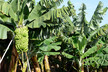
Banana production in South-East Asia and other regions continues to face pressure from Fusarium Wilt, also known as Tropical Race 4 (TR4). The soil-borne pathogen affects plantations in countries including Indonesia, the Philippines, and regions across Africa and South America.
Growers are managing weather variability, input cost increases, and supply constraints alongside disease risks. TR4 infects plant roots and persists in soil for extended periods, with no direct control once established.
Victor Prada of the World Banana Forum said: "Fusarium Wilt TR4 remains a major concern both in South-East Asia and globally, as it is a highly destructive soil-borne pathogen that persists in the soil for decades and has no effective control once established. When present, it causes severe yield losses, can make land unsuitable for banana production over the long term, and significantly increases production costs due to the need for strict prevention, biosecurity, and containment measures, making it a persistent and unresolved threat for banana producers worldwide."
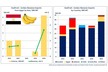
TR4 affects multiple banana varieties, including Cavendish. In 2015, the disease affected over 15,000 hectares of Cavendish plantations in Mindanao in the Philippines. Indonesia remains the third-largest banana producer globally with about 9 million metric tons annually, while India produces around 38 million metric tons and China about 12 million metric tons.
Sigit Wicaksono said: "TR4 remains a major challenge for our farmers without a solution because once they are in the soil, it is hard to remove them or control them from spreading. If the banana plantations are infected, we have to abandon or burn the entire area. We are doing inter-cropping to stop the spread of TR4 by planting coffee and cocoa."
Global banana exports reached 25 million metric tons last year, valued at around US$17 billion. Research into resistant varieties is ongoing. Chinese scientists have developed the Zhongre No. 1 variety, which shows resistance but is not fully immune.
Matheus Lima said: "Promising varieties such as Zhongre No. 1 are an important step forward, but they are not a complete solution, as they are not immune and can still become infected and spread the pathogen."
He added: "Effective prevention and management of TR4, therefore, requires a collective and sustained effort across governments, industry and farmers, with stronger coordination along the value chain, and continuous and practical capacity building at all levels."
Source: The Star