In Queensland's pineapple sector, a severe weather event has created a sharp supply shock, leaving Piñata Farms navigating one of its most disrupted seasons in years. As sales and marketing manager Rebecca Scurr explains, the impact has been both immediate and far-reaching, with the business now operating in what she describes as "the peak of the shortage".
The issue stems from prolonged cool, overcast, and wet conditions during last year's growing period. Pineapples, which rely on stable tropical conditions, responded poorly. "It sent the plants into stress," Scurr says. "They all flowered at once." In a crop built on precision timing—where one plant produces one fruit over a two-year cycle—that loss of staggered flowering has triggered a boom-bust pattern.
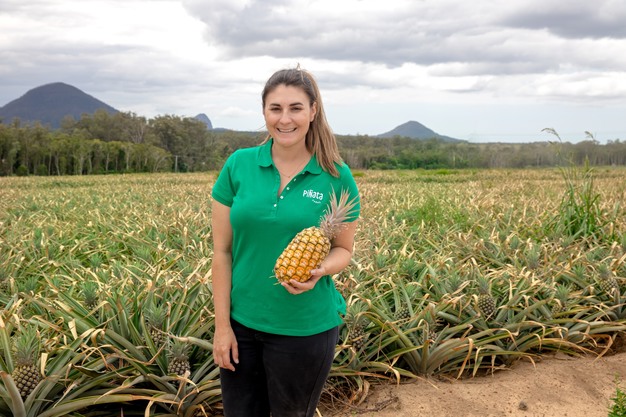 © Piñata Farms
The result was a surge of small fruit earlier in the year, followed by a steep drop-off in supply. "This week we've got about 3% of what we'd normally harvest, next week about 5%," she says. Over the coming months, volumes are expected to sit at roughly a third of normal levels before recovering in spring.
Even where prices rise, the economics remain unfavourable. "It compensates a tiny bit, but no, it never equals what a good crop would have," Scurr says. In theory, higher prices could offset lower volumes, but in practice, rising costs erode any gains. Labour inefficiencies have been particularly acute, as irregular flowering forces repeated harvesting passes. "We've got blocks that we've already picked four times… and then we've got to go back again," she says. "You're picking a block five times when, if things go well, you only pick it once."
This fragmentation has driven up costs while reducing productivity. "The most productive crop is a really uniform-yielding crop, and that's the opposite of what we've had," she adds. The combination of lower yields, smaller fruit and higher labour input means "the dollars don't stack up… in revenue or in cost of goods".
Against this backdrop, Scurr emphasises that consistency — rather than short-term recovery — is the core priority. Even in difficult seasons, maintaining supply and quality remains central to the company's approach.
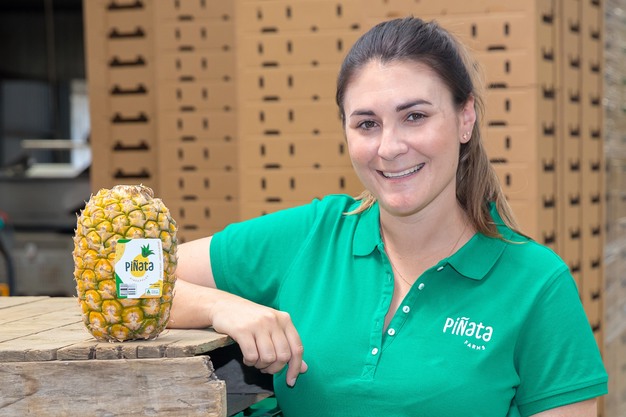 © Piñata Farms
"And that is because we feel that to be a responsible supplier of fruit, we can't only do it when it's easy, so we have to be here 52 weeks of the year," she says. "We have to provide not only consistency in the product but consistency in availability as well — we want to keep people putting strawberries or pineapples or whatever in the trolley every single week."
That philosophy extends to strict quality controls, even when supply is tight. Fruit that does not meet minimum sugar levels is withheld from retail, reinforcing a long-term focus on consumer trust. "We can never match the consistency of something like a block of Cadbury's Dairy Milk," she says. "But we can get a lot closer."
The idea of competition with other goods, rather than just with other pineapple providers, motivates Scurr. She says Piñata is not just trying to win its share of the pineapple "pie" but trying to lift the whole sector.
"If we can win as an industry first — if we can raise the bar on pineapples and people just buy more pineapples regardless of whose label is on it, then our job is to fight for our share of the pie — but if we grow the pie together, it's a bigger pie for everyone."