At the high altitudes of South Africa's eastern Free State province, apple farms are harvesting the last two cultivars, Cripps Pink and Cripps Red. These farmers open the commercial apple season, and they exit first.
"In general, we have had a very good crop, both quantity and quality," says Doug Osler, apple farmer from Lone Tree Farms and a member of the Hoogland Vrugtekwekersvereniging, bringing together apple growers from the Free State, Mpumalanga, and Limpopo.
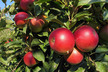
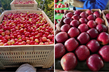
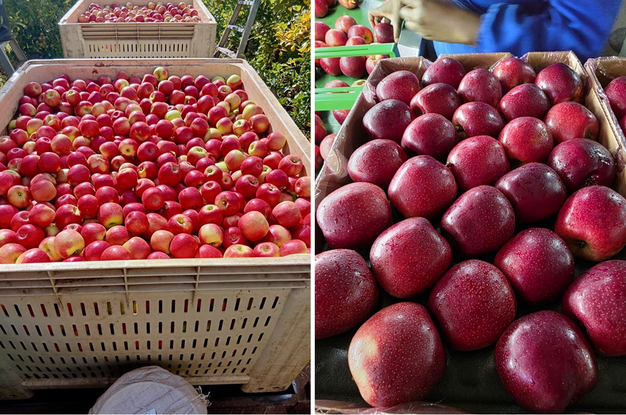 © Lone Tree Farms Left: Cripps Pink (Pink Lady) harvested ahead of the continuing rain. The fruit is destined for Kenya, India, and Europe. Right: High colour new Gala strains like Bingo and BigBucks are opening doors
Challenging harvest amid the rain
"The rain has proved to be challenging late in our harvesting season, with March ending on 244mm on a 27-year long-term average of 99mm and April 106mm on a long-term average of 67mm. The benefits of the rain were the cooler weather that helped with colour development, but it has made harvesting challenging with bruising and also a delay in getting the crop off."
He explains that apples are more susceptible to bruising after rain because they absorb water, which increases the turgor pressure, making the tissue more fragile, hence more likely to bruise.
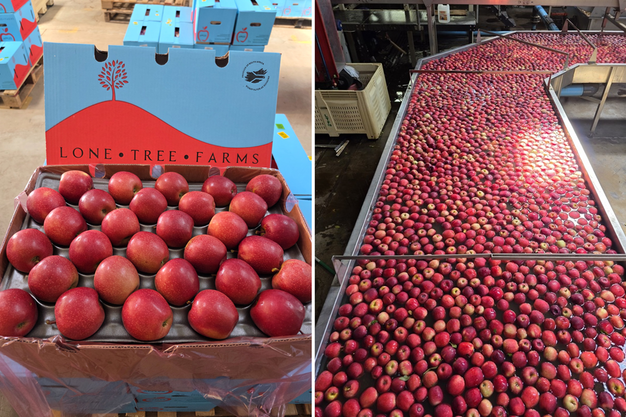 © Lone Tree Farms"I do feel that new genetic Gala strains are easier to move and they achieve a higher return."
Middle East uncertainty affects planning
The uncertainty created by the issues in the Middle East has made it very difficult to plan accordingly, Osler adds. "It has changed our marketing strategies on the harvested crop, as well as containers being directly impacted with fruit en route to markets. In saying that, we have had some positive results of other markets taking more fruit and getting better prices when the Rand weakens."
India has been a specific market where they have seen much growth in volume this season, particularly good colour strains of Gala. The good colour year unlocked the market, although he maintains that changes made to trade protocols have a much stronger influence on increased volumes versus colour.
"The protocol changed to sea-based cooling, which has had a massive impact on volumes to India. The change in protocol came about through work done by Hortgro [deciduous fruit industry organisation] in partnership with the national department of agriculture," he says, "that results in South African apple growers benefiting and being competitive internationally, with all the challenges of trade protocols to each destination."
He notes that their competitiveness is also helped by new genetic strains, which are easier to move and which achieve a higher return. Farmers like himself have tried to stock up on bulk fuel and fertiliser supplies to avoid massive price increases, but it's putting cash flow under pressure.
For more information:
Johan Naudé
Hoogland Vrugtekwekersvereniging
Email: [email protected]