Late frosts continue to be a major threat to high-value crops in Europe. A single night with temperatures dropping below freezing can cause significant losses in regions that produce stone fruits and nuts, where profits depend heavily on each season.
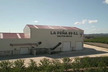
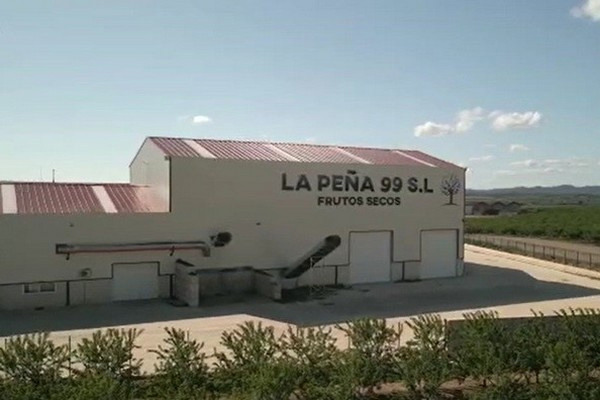
Miguel Salafranca, a grower and owner of Peña 99 SL in Huesca, which specializes in almond and walnut production, faced this scenario.
 © SIS
© SIS
"Certain areas consistently experienced issues with frost"
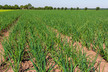
"We are a family business with 350 hectares of almond trees and 30 hectares of walnut trees. We had areas within the estate where frost was a recurring problem," Salafranca stated.
In his case, the risk was ongoing rather than a single incident. "Practically every year, we experience frost episodes in parts of the estate. The only exception was 2022, when we encountered a total frost—the worst ever," he said
 © SISThis unusual cold weather pattern occurs because microclimates form within the farm, causing cold air to gather in specific areas and raising the risk of crop damage.
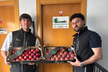
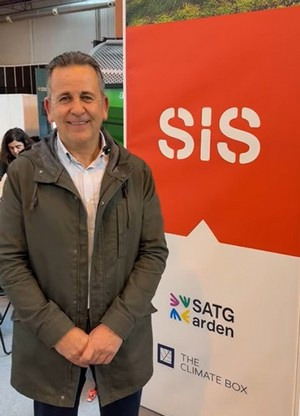
Photo right: Miguel Salafranca, grower and owner of La Peña 99 SL.
From uncertainty to decision-making
To mitigate this risk, the initial step involved understanding how the cold circulates within the farm. In this context, he started working with The Climate Box technology, which is represented in Europe by SATGarden.
"They analyze the farm by zones to identify the coldest and warmest areas. Using this information, we can determine where to implement actions," he stated.
This analysis enables accurate identification of the most vulnerable areas and helps optimize the planting strategy and investment in protection systems.
"Understanding microclimates allows us to make more efficient investment decisions and reduce the impact of frost on the plot," stated Gabriel Usera, co-founder of The Climate Box.
Real-time information to forecast frosts
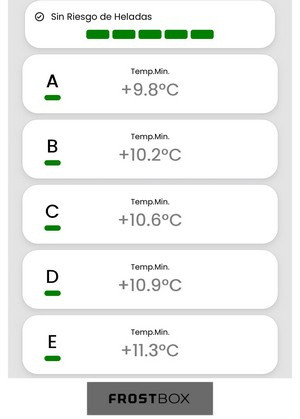
In addition to the initial study, the system can predict specific frosts 24 to 48 hours in advance. "The grower gets alerts on his mobile phone with the frost forecast and its severity, enabling him to act promptly," Usera said.
In practice, this provides the farmer with increased control and peace of mind. "It sends us alerts on the phone when temperatures decrease and shows how the systems are activated. We feel confident that we are protected," Salafranca stated.
 © SIS
© SIS
Active protection: The role of the SIS system
Using the data from the microclimatic analysis, the next step was to install active protection measures in the coldest zones.
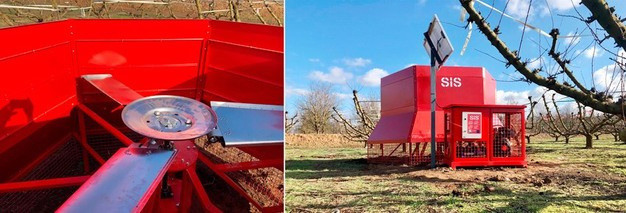
The farm is equipped with five SIS (Selective Inverted Sump) systems, a technology patented by SATGarden, the company responsible for its installation across Europe.
 © SISThe system operates on a key principle: during radiation frosts, cold air gathers at ground level. The SIS towers draw this cold air up, stopping it from staying in contact with the plants.
"The towers are automatically activated when the temperature drops, collecting the cold from the ground and moving it upward so that the trees are not affected by it," the grower stated.
Results: From recurrent losses to insured seasons
The results have been clear: as Salafranca states, using both microclimatic analysis and active protection has effectively minimized the effects of frost.
"We can say that the study of the areas alone has allowed improving production by 15% to 20%," he added.
The most crucial data is observed during critical situations: "In two years with frosts ranging from -2.5 to -3 °C, the system has preserved 100% of the production." Economically, this translates into substantial savings. "Across approximately 12 hectares, this amounts to between 100,000 and 110,000 euros annually," he stated.
A strategic decision for the future
Aside from the specific outcomes, the case illustrates a shift in agricultural management: moving from reacting to issues to proactively anticipating them. "Today, to stay efficient, you must identify all risks and address them," the grower concluded.
Amid rising climate variability, integrating prediction tools like The Climate Box with active protection systems like SATGarden's SIS is becoming a crucial strategy to safeguard high-value crops and maintain farm profitability.
 © SATGardenFor more information:
SATGarden
C/ d'Orient, 32 08172 Sant Cugat del Vallès (Barcelona)
Tel: (+34) 935 122 686
Email: [email protected]
www.satgarden.com