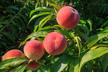
Rio Grande do Sul is the largest peach-producing state in Brazil, accounting for about 57% of the national planting area, according to the Brazilian Institute of Geography and Statistics (IBGE). The state is also home to Embrapa Clima Temperado in Pelotas, a research center focused on technologies for southern Brazil agroecosystems.
Research activities are led by Maria do Carmo Bassols Raseira, who has worked in plant breeding since graduating in Agronomy from the Federal University of Pelotas in 1968. With postgraduate training in the United States, she leads a team of six researchers dedicated to genetic improvement in peach cultivation.
Breeding programs focus on crossbreeding genetic materials with complementary traits to develop cultivars adapted to different climatic conditions across Brazil. Current work targets improving fruit quality at the beginning and end of the harvest season. Production is concentrated between November and December, while early-season fruit harvested in October may show bitterness due to cold conditions during flowering.
Late-season fruit harvested in January faces a higher incidence of fungal pressure due to prolonged rainfall. The research team works with specialists from other states to support the development of adapted materials.
Although based in Pelotas, Embrapa operates a network of 25 observation units across São Paulo, Minas Gerais, and Espírito Santo. These sites are used to test genetic materials under different rainfall conditions. The program includes collaboration with local producers.
In addition to peaches, the unit works with related varieties such as nectarines, which are less common in Brazil due to imported planting material and higher acidity.
Source: Abrafrutas