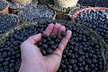
Açaí has developed into one of Brazil's bioeconomy products, supported by external demand, value addition, and the expansion of cultivated areas. According to the Brazilian Institute of Geography and Statistics, annual production is around 1.6 million tons, combining extractive harvesting and cultivation.
Pará accounts for approximately 85% of national output. Amazonas and Amapá follow, with production that remains predominantly extractive. States such as Roraima and Acre are expanding planted areas under irrigated systems to enable a more consistent supply.
Data from the Ministry of Development, Industry, Trade, and Services show that Brazilian exports of açaí, including pulp and preparations, exceeded US$200 million in 2024, maintaining growth in recent years. The United States accounts for more than half of external purchases, followed by the European Union and Japan.
International demand is driven mainly by frozen pulp and concentrates used in beverages, supplements, and functional foods. Brazil records a positive trade balance in açaí, as imports are minimal. The product forms part of the Amazonian export basket.
While Pará leads in volume, other states are focusing on processing to capture added value. In Roraima, producers have invested in irrigated systems in savanna areas, allowing year-round harvesting and reducing seasonal concentration typical of floodplain production.
In the Cantá municipality, growers are integrating production and processing. The model includes fruit selection, washing, blanching, and pulp extraction prior to commercialization. Blanching is applied to eliminate microorganisms and reduce sanitary risks.
The expansion of consumption has led to tighter sanitary protocols. Heat treatment is recommended to prevent contamination by Trypanosoma cruzi, the parasite linked to Chagas disease. Producing states have intensified training and quality control measures. In Pará, protocols have been established that serve as a reference for other regions.
Although production in the Amazon remains largely extractive, irrigated cultivation is expanding in adapted areas. The technology allows greater predictability of supply, more uniform fruit, and continuous contracts for processors and exporters.
Industry observers indicate that future development will depend on balancing production growth with environmental preservation, as the açaí palm is native to the Amazon ecosystem. Expanding industrial capacity in northern states may increase participation in higher-value segments such as concentrated extracts and ingredients for pharmaceutical and cosmetic uses.
Source: DatamarNews