"The situation is very complex, mainly because Chile ships over 90% of its cherry exports to a single destination, China, and today demand in China is weaker than expected, affected by a sluggish economy and more cautious consumer spending," stated Nicolás Yavar from Upac Fruit.
 © UPAC Fruit
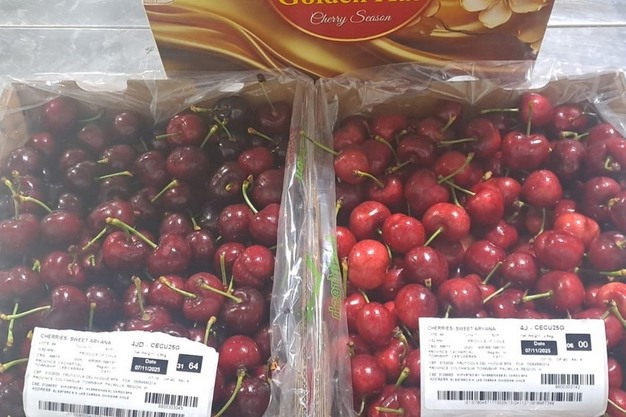
This slowdown has directly affected consumption and prices. The market is favoring small sizes, while Chile has focused on larger cherries this season. "The market is full of large sizes, but sales are slow," Yavar stated.
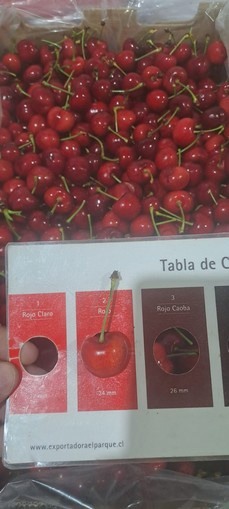 © UPAC Fruit "Currently, cherries in China are selling for approximately $30 per 5kg box. But if you subtract internal costs, commissions, and freight, there's little left for the grower," Yavar stated. "At the same time, production costs have increased. Cultivation costs can easily reach $2.5 per kilo. Last year, growers were only paid $1.5 to $2 per kilo. Thus, they were operating at a loss."
Chile will finish the season with about 114 million boxes, less than the initially projected 150 million. But the problem goes beyond just volume. "If sales are weak with 114 million boxes, what will happen when Chile produces 150 or 160 million boxes?" he wonders.
Market diversification seems necessary but has its limits. "The United States received 5 million boxes this year. It grew, but 5 million is nothing," he says. Europe is also absorbing small volumes, which increases reliance on the Chinese market.
Yavar compares the current situation to what happened in the apple sector during the pandemic. "Business was so bad that many farmers uprooted apple trees and switched to cherries. Today, apple farming is profitable again because the supply has decreased." For cherries, the situation might be similar: "We are going to have a couple of tough years. Production needs to rebound, and China's economy needs to improve."
 © UPAC Fruit
Yavar is cautious about the Chinese New Year on February 17. "The volume arriving around then will be small. That could push up the price a bit, but that will only benefit a small percentage of the harvest."
"The cherry sector will no longer achieve profits of $3 per kilo," he concluded. "The question is whether it will remain profitable, even with small margins."
 For more information:
Nicolás Yavar
UPAC Fruit
Chile
Tel: +56 9 9346 8037
Email: [email protected]
www.justfruits.org