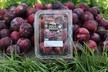
A farmer in Lleida, Spain, was arrested in July for growing, selling, and possessing the patented nectarine variety 'Nectadiva' without paying the required royalties, according to Spanish authorities.
The development of a new fruit variety grants the breeder exclusive commercial rights for around 25 to 30 years. During this period, growers must obtain authorization and pay royalties to cultivate and market the variety. Investigators found that the farmer had bypassed this system, planting around 5,000 Nectadiva trees across three separate plots.
According to Spain's Civil Guard, the patent for the variety is held by the French company Agreo Selections Fruit. Authorities stated that the farmer was involved in the unauthorized reproduction and conditioning of the protected variety.
"The process involved reproducing and conditioning protected plant varieties through grafting or inoculation without the consent of the owners of the protection titles. The suspect was released after giving a statement at police headquarters," the Civil Guard said.
The investigation began in February 2025 at an agricultural company in the Segrià region, a fruit-producing area in the province of Lleida. During inspections, officials collected plant material that matched the protected Nectadiva variety. Subsequent analysis confirmed that all 5,000 trees planted across the three plots were unauthorized.
If the case is classified as an industrial property crime under Article 274.4 of Spain's Penal Code, the farmer could face a prison sentence of one to three years, as well as fines of up to €288,000, equivalent to about US$340,000.
The case highlights ongoing enforcement activity linked to plant variety protection in Spain, where breeders and authorities continue to monitor unauthorized propagation of patented fruit varieties within commercial orchards.
Source: AS