The Chilean blueberry season shows promising signs, with higher volumes, better fruit quality, and a strategy increasingly centered on quality and varietal renewal.
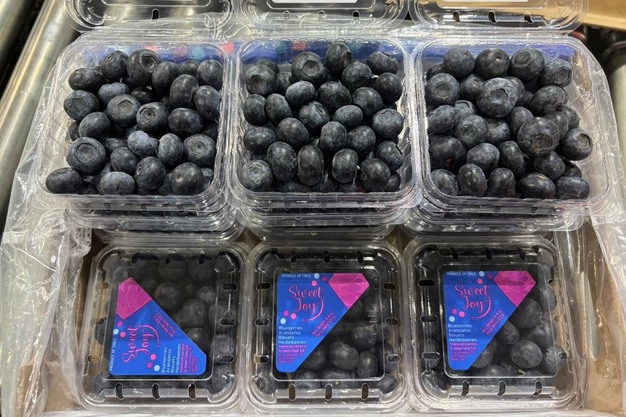
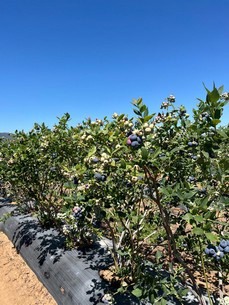
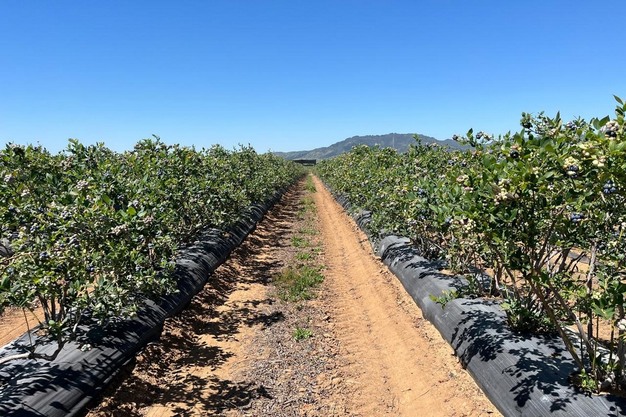
"The season was good, with an increase in production compared to the previous season. The company operates two production areas: Cauquenes, the earliest, with 10 hectares of the Susi Blue variety, and Retiro, with 41 hectares where Duke, Blue Ribbon, Legacy, Draper, and Susi Blue are the main varieties. Overall, the company produces around 600 tons, allocating approximately 510 tons for export, with an export yield of about 90%," stated Vicente Aguirre and Diego Romero, the production manager and general manager of El Álamo, a blueberry growing, packing, and exporting company based in Chile's Seventh Region.
 © El Álamo
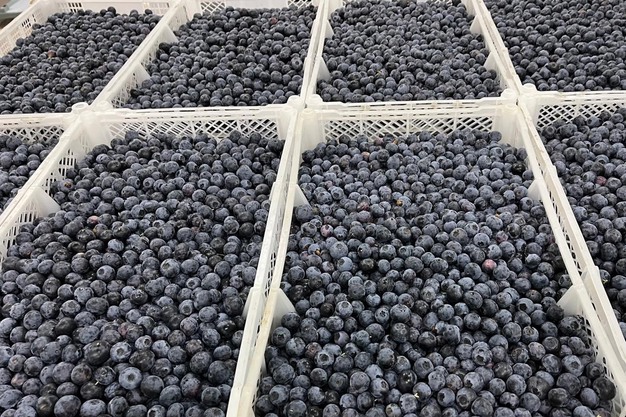
Europe remains the primary destination, with the Netherlands serving as the main entry point, followed by South Korea. "We also ship some to China and Taiwan, but the majority of volumes go to Europe and Korea," Aguirre noted. Most of the fruit is transported by sea, which requires careful post-harvest handling. "Maintaining the cold chain is crucial: we harvest, cool immediately, and process at 0 to 1 °C to ensure the fruit arrives in perfect condition," he emphasized.
 © El Álamo
The executives noted that, beyond traditional markets, emerging markets with promising potential for Chilean blueberries have been identified. Taiwan is increasingly demanding high-quality, large fruit, and interest in blueberries from India and the Middle East is growing, Romero stated. These are currently niche markets, but they could grow if we meet the quality standards of these new consumers, he added.
Romero stated that international prices have stayed relatively steady. "This year, they are somewhat better than last year, partly because Peru brought its harvest forward and left a shorter window for Chile," he said. "Chile exported more volume to Europe, but the market responded well to good-quality fruit with programs," he added.
 © El Álamo
Both agree that quality is the main competitive factor. Romero states, "The market is more about condition: good fruit versus bad fruit." Aguirre adds, "Our goal is to maintain and grow production without losing quality; this is the foundation of our business."
 © El Álamo
The future success of Chilean blueberries depends on genetic renewal and strategic project decisions. "Growing blueberries will continue to be a profitable venture if we choose the right varieties and properly manage projects from the outset," Aguirre stated. "Chile has a specific window between January and March. It's not just about increasing volume, but about offering high-quality fruit to meet the expectations of an increasingly discerning consumer," Romero stated.
 © El Álamo For more information:
Vicente Aguirre and Diego Romero
El Álamo
Chile
Tel.: +56 9 9558 8443 /+56 9 8901 5390
Email: [email protected] / [email protected]
www.eaf.cl