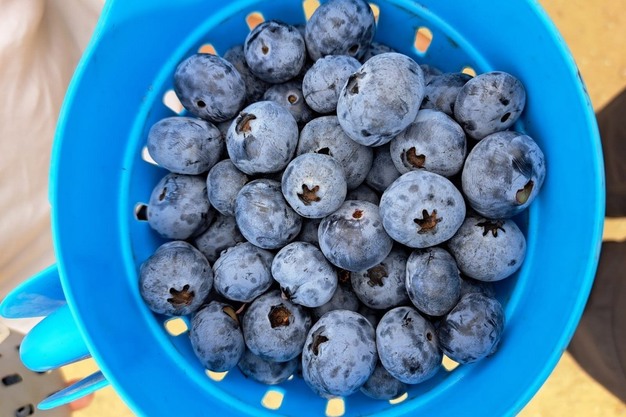
"At the end of week 1, Peru had exported around 340,000 tons, which represents a growth of approximately 20% compared to the previous season. However, besides the volume, the most important factor right now is how the sector is fine-tuning its strategy to target more competitive and demanding markets," says Luis Miguel Vegas, CEO of Proarándanos.
 © ProArándanos
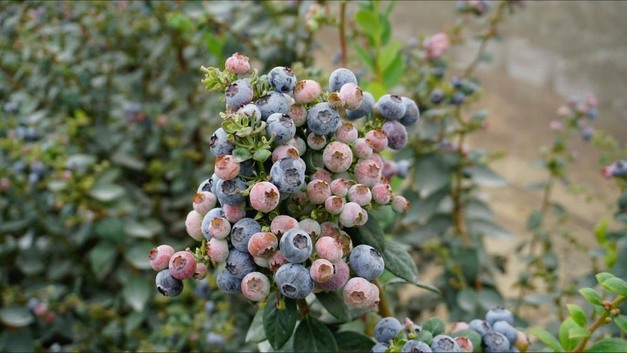
The United States remains the main destination for Peruvian blueberries, accounting for around 47% of all shipments, followed by Europe with 28%. "The U.S. market continues to be important, but we are seeing increasing diversification. Europe is recording significant growth, with increases of around 36% compared to last season, which reflects the sector's greater capacity to adapt to different consumer profiles," he says.
 © ProArándanos
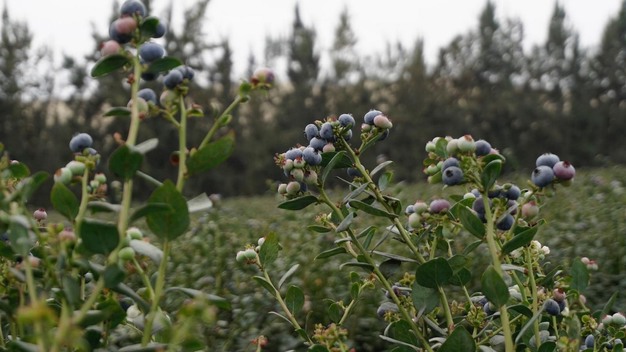
China, for its part, continues to consolidate as a relevant market, with annual increases of around 18%. "Asia maintains its strategic importance, although it's also a market that is still sensitive to quality, the fruit's condition, and the regularity of the programs," says Vegas. Added to this is the growth of the United Kingdom and other destinations, which together already represent more than 10% of total shipments.
 © ProArándanos
In terms of production, La Libertad maintains its leading position with 164,848 tons, which represents about 48% of the volume exported, followed by Lambayeque, with 83,060 tons (24%). However, worthy of note this season are the figures recorded by Ica, which reached 48,082 tons, registering a year-on-year growth of 52%, the highest among the main producing regions. "Ica's growth has been possible thanks to a combination of greater production efficiency, new production areas, and a clear commitment to high-yielding genetics," he says.
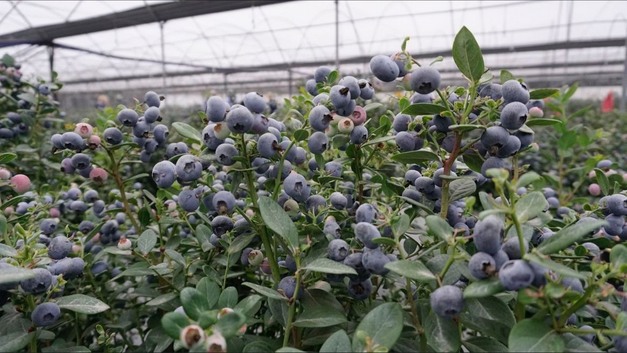
In terms of varieties, the exported portfolio is increasingly diverse. The Ventura leads with a 19% share, followed by the Sekoya Pop (14%), Biloxi (12%), and Mágica (11%), which account for the majority of shipments to the United States and Europe. "Today, varietal decisions are completely in line with market demands in terms of firmness, flavor, and post-harvest shelf life," says Vegas. With regard to organic blueberries, Peru exported 29,205 tons, with a significant contribution from companies such as Agrícola Cerro Prieto, Agualima, and Camposol. Despite higher costs, this sector's role remains strategic in premium markets.
 © ProArándanos
Lastly, Vegas says that the challenge is no longer just to grow in terms of volume. "The 2025/26 campaign confirms that the Peruvian sector is now in a new age where efficiency, market interpretation, and logistical coordination are decisive. Leadership is sustained by the ability to make finer and timelier decisions."
 For more information:
Luis Miguel Vegas
ProArándanos
Peru
Tel.: +51 944 000 399
[email protected]
www.proarandanos.org.pe