It is a scramble, but Gurra Downs Date Company continues to push forward, carving out a place in a market dominated by vastly cheaper imported fruit.
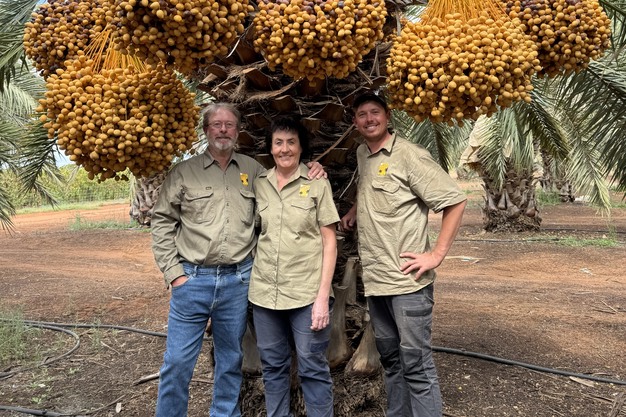
For Dave Reilly, the challenge begins with scale. Globally, the date industry produces around nine million tonnes annually, with the overwhelming majority grown in low-cost regions across the Middle East and North Africa. Australia, by contrast, produces only about 120 tonnes a year. "Our limitation is our competitiveness against imported products," he says. "We're importing over 7,000 tonnes."
 © Gurra Downs Date Company
The cost gap is stark. "They can land good-quality Medjool in the Australian market at around $12 a kilogram, and we're really needing to get $18 to make ends meet," Reilly explains. With major new investments in countries such as Egypt, that pressure is only intensifying. "I have heard figures that it's likely to be $5 a kilo landed at Sydney. So that's what's coming, and it's very hard to compete against that."
Against that backdrop, export offers little relief. "Even when we're quoting for export orders… generally we're about three times the price of what other competing nations are," he says. Markets that might once have offered opportunity are now well supplied by lower-cost producers, even for fresh product, which has a much shorter shelf life. "There's almost no week of the year now where fresh dates aren't available somewhere."
 © Gurra Downs Date Company
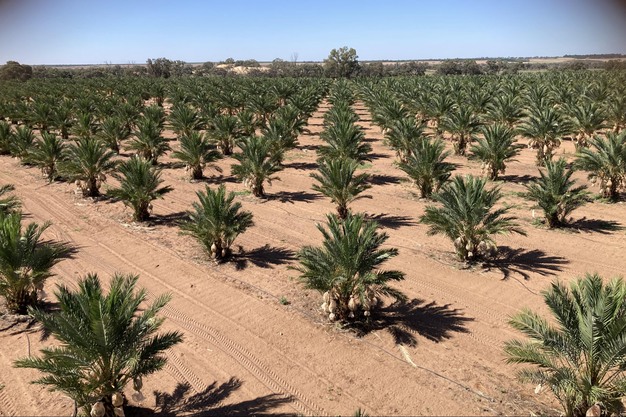
Fresh dates do present a niche. Gurra Downs grows varieties such as Barhee, marketed as a crunchy, fresh fruit rather than a dried product. "That's quite popular amongst those communities that know it," Reilly says. But uptake remains limited. "The Australian consumer hasn't really embraced the fruit that much, so that's going to be a challenge in marketing long-term."
With traditional pathways constrained, the business has diversified. "We've invested in equipment such as a date paste-making line," he says, targeting food manufacturers and retail products. Yet even here, margins are tight. "We're competing against products that are $2 a kilo, and we're asking $15 a kilo and missing out on sales."
Other revenue streams offer more promise. Gurra Downs supplies date palm genetics to growers nationwide and has seen viable models emerge through agritourism. "These guys are getting full retail value from a travelling public," Reilly says, pointing to operations that combine farm visits with on-site product sales. The company itself also sells directly to consumers via mail-order boxes, supplementing its wholesale business.
 © Gurra Downs Date Company
Despite the headwinds, Reilly sees a role—albeit a limited one—for domestic production. "Our market is sympathetic Australian customers who want to support Australian-grown fruit," he says. The current geopolitical climate has also sharpened attention on supply chains. Disruptions to imports have highlighted vulnerabilities, even if they have not yet materially shifted the economics.
"It's an industry that I think will remain small-scale simply because it's very labour-intensive," Reilly says. Even so, Gurra Downs continues to invest, trial new varieties, and refine its systems. "We're quite quick on our feet and proactive… looking for that golden bullet."
For now, survival depends on adaptability. "We'll keep forging ahead," he says.
For more information:
Dave Reilly
Gurra Downs Date Company
https://www.gurradowns.com.au/
[email protected]
Tel: +61 8 8583 8314