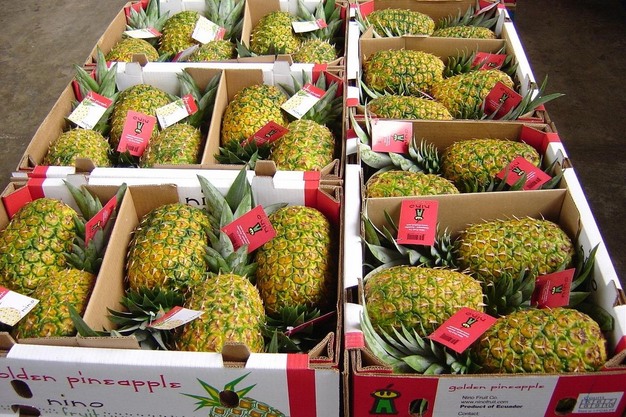
"According to data from the Central Bank of Ecuador, the country's exports have increased from 80,750 tons in 2018 to 140,448 tons in 2025, while the value of those exports has almost doubled, reaching US$ 81.1 million. Sales have indeed doubled in the last eight years, boosted by a better average price," says Álex Bustos Guerra, general manager of the Ecuadorian company GreenControl-LA.
 © GreenControl-LA
The FOB price has shown an upward trend, standing at US$ 0.58/kg in 2025 compared to a historical average of US$ 0.52/kg. This increase is partly due to production problems in Costa Rica, the main global competitor. "It has been a good year for Ecuador because of supply issues in Costa Rica," he says.
However, the growth in terms of volume and value contrasts with the setback in market diversification. While in recent years Ecuador had been exporting to 42 countries, in 2025, shipments went to just 18 destinations. "More than half of the markets have been lost because of a greater concentration of trade," he says.
The European Union has established itself as the main destination, with 36.7% of the volume, with the Netherlands standing out as a logistics hub. The United States has also become a prominent market, rising from 1.1% in 2018 to 32.4% in 2025. In contrast, Chile has seen its share fall from 39% to 17.8%.
 © GreenControl-LA
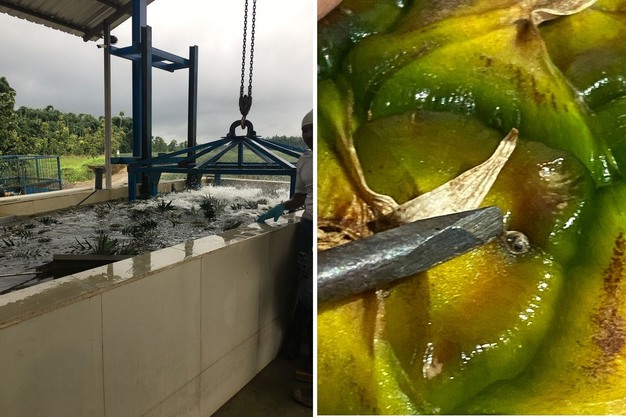
This drop in the Chilean market is directly linked to the presence of a quarantine pest: a small snail of the genus Succinea. "It's not a pineapple pest as such, but it is present in the crop and can attach itself to the fruit," says Bustos.
The impact has been significant. If a live specimen is detected at the destination, the cargo can be destroyed or returned. "If they find a live snail, they'll destroy the fruit in the container or send it back to the supplier, generating huge losses for the exporter," he says.
The control of this mollusc represents a considerable technical challenge. Inspecting a container can require 60 to 80 hours of manual labor. Moreover, traditional methods, such as methyl bromide, are not effective. "The snail is extremely resistant, even to conventional treatments," he says.
In this context, companies such as GreenControl-LA are developing phytosanitary alternatives without chemical residues. "We are testing new technologies to control this pest, but it is a difficult challenge," he says.
 © GreenControl-LA
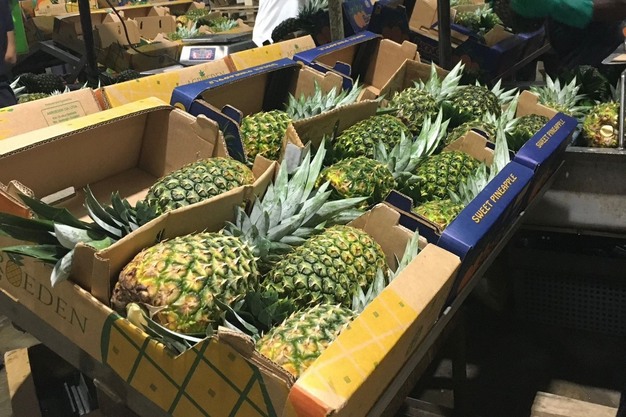
Despite these obstacles, "Ecuador maintains an outstanding position in international trade. It is the world's fifth-largest pineapple exporter, despite ranking 26th as a producer; a fact that reflects the sector's strong export orientation and its capacity to adapt to an increasingly demanding market," he says.
 For more information:
Álex Bustos Guerra
GreenControl-LA
Ecuador
[email protected]
www.greencontrol-la.com