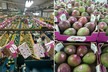
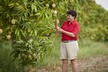
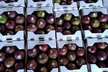
The Ecuadorian 2025 mango season is underway with greater stability than in the previous two years, although marked by a natural adjustment in volumes. According to Bernardo Malo, president of the board of directors of Fundación Mango del Ecuador, the season has followed two atypical campaigns, as "production in 2023 fell by between 50 and 60% due to the El Niño phenomenon, and 2024 was marked by an overproduction of around 15.5 million boxes." For this year, he expects volumes to be "approximately 15% lower," which will result in a normal campaign in terms of production.
 © Fundación Mango del Ecuador
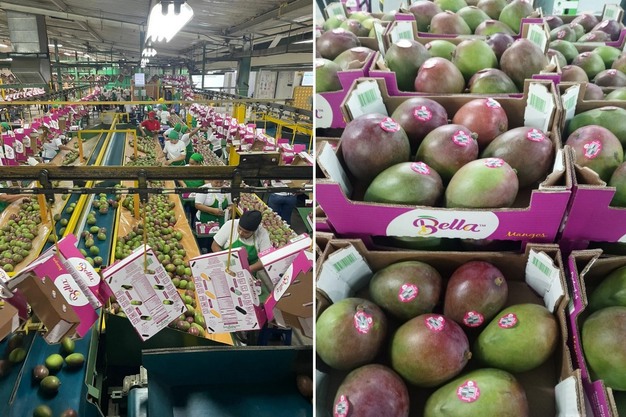
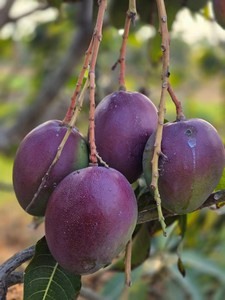
The country's varietal structure still shows just how export-oriented it is. Ecuador mainly produces Tommy Atkins, a variety that is very well-accepted in the United States and which accounts for more than 90% of shipments. "Europe demands varieties with less fiber, such as the Kent, which is also produced in Ecuador, although on a much smaller scale," says Bernardo. Smaller volumes of the fruit are also shipped to Canada, Central America, Europe, and Chile. The Ataulfo variety has been gaining ground, although those exports are limited by the high cost of air shipments. Mango volumes in Ecuador will be "about 15% lower, and Ecuador is a costly origin when it comes to air freight, and that puts limits on the potential volumes."
Regarding regional competition, Bernardo says that Ecuador's campaign inevitably overlaps with those of Brazil and Peru. "None of the countries in the region has a window of its own. We depend on the advance or delay of each country's supply." This season, however, there have been relatively orderly transitions, without severe oversupply pressures. "The market knows no nationalities; when more mango is available, prices go down," he says, although he believes that price levels have generally behaved positively.
 © Fundación Mango del Ecuador One of the most challenging aspects of the season has been the tariffs. "Since 2021, Ecuador has been paying 6.6 cents per kilo to deliver mangoes to the United States after the expiry of the GSP. This is a disadvantage compared to countries with a free trade agreement, such as Peru," he says. Added to this was the temporary application, from April, of an additional tariff that went from 10% to 15%. "This had a tremendous impact, because mangoes were doubly affected. The suspension of these tariffs as of November 13 was a breath of fresh air for the sector.
Despite these challenges, Bernardo says that Ecuador maintains a key strength. "We are the only country in Latin America with 100% of the exportable supply certified by GlobalG.A.P." This consolidated traceability, he says, has allowed us to differentiate ourselves in a highly competitive market. He also points out that work is being done to pursue new opportunities, such as the opening of the South Korean market. This couldn't be finalized this year, but the necessary work is expected to be resumed next season.
For more information:
Bernardo Malo & Johnny Jara
Fundación Mango del Ecuador
Tel.: +593 9 9925 2808
[email protected]
https://mangoecuador.org