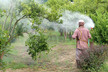
Uganda continues to import highly hazardous pesticides banned in the European Union, with experts warning of risks to public health, food safety, and the environment. Professor Wenzel Geissler of the University of Oslo said, "The safest way to use pesticides is not to use them," noting that many of these products are no longer used in Europe but remain available in African markets. He added that residues are visible on tomatoes, vegetables, and fruits sold locally. Prof. Peter Atekyereza of Makerere University said, "Many farmers handle these chemicals without protection, producing tomatoes that end up on consumers' tables with harmful effects."
Experts call for phasing out hazardous products and shifting toward agroecological practices, natural pesticides, and improved farmer training. Uganda had 115 active ingredients and 669 brands registered by the end of 2023, with 55 active ingredients and 459 brands classified as highly hazardous. Prof. Stella Neema of Makerere University warned that these substances are linked to health concerns, while consumers are advised to wash produce thoroughly. A 2025 investigation by Public Eye reported that EU member states approved the export of nearly 122,000 tons of pesticides in 2024 that are banned in Europe. Experts state that without changes, Uganda faces ongoing pressure on food safety and environmental health.
Source: Monitor