A study by Ricardo Forcadell and María Martín, with support from the Provincial Environment Service, reveals that the province of Teruel has 10,404 hectares dedicated to truffle farming, with over 70% of its 236 municipalities, 167 in total, hosting planted areas. This makes Teruel the region with the world's largest cultivated area of this crop, with farms spread across its 10 counties. The highest density is in Gúdar-Javalambre, accounting for 64.3% of the total with 6,689.43 hectares, followed by the Community of Teruel with over 1,000 hectares, i.e., nearly 13% of the total.
Municipalities vary widely in planted area, from small patches of a few hundred square meters to farms nearing 100 hectares, especially in Albarracín. Most truffle cultivation involves Tuber melanosporum, the most profitable species locally, while others are less common. Production fluctuates significantly, from non-productive plots to farms producing up to 80 kg per hectare in good years.
Cultivation mainly takes place between 900 and 1,200 meters above sea level, though it ranges from 300 meters in Alcañiz to 1,500 meters in Mosqueruela. Areas unsuitable for truffle growth often suffer from unfavorable climates, low elevations, or are used for other crops, such as fruit trees and olives. Higher-altitude municipalities also lack holm oaks due to altitude and grazing.
This study, part of the Hidrotuber project funded by the Investment Fund for Teruel (FITE), aims to assess the real extent of truffle cultivation and improve irrigation practices. It combined aerial imagery from the National Orthophotography Plan with field visits to verify plantations.
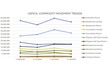
From 2017 to 2020, cultivated area increased from 7,090 to 9,292 hectares, and municipalities with truffle farms grew from 148 to 159. Over eight years, this expansion has continued steadily, resulting in 46% growth in cultivated area and establishing Teruel as a global leader in truffle farming.
Source: diariodeteruel.es