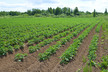
Irish potato farmers in Plateau State, Nigeria, report higher yields this season, with tubers harvested in larger sizes and volumes than in recent years. The increase has followed several years of low yields.
The abundance has led to a decline in market prices. A 50kg bag that previously sold for ₦150,000–₦170,000 (US$103–117) now sells for ₦30,000–₦40,000 (US$21–27). The price drop has attracted buyers to markets in Jos.
Plateau accounts for about 90 per cent of Nigeria's potato production, according to the Potato Value Chain Support Project, assisted by the African Development Bank. Coordinator Thomas Muopshin said, "Countries like Chad, Ghana, Niger, Benin, among other African countries, have agents in Nigeria who supply them the crop at regular intervals."
Farmers attribute the higher yields to favourable weather. They said that in recent years, the crop was affected by late blight, bacterial wilt, fungal infections from persistent dew, and other foliar diseases. This year, conditions changed. Potato farmer Solomon Albert noted, "We are thrilled with the bumper harvest this year, and it is largely due to the absence of dew that plagued our farms in previous years. This year, however, there is a change in the weather. So, mainly, the change of weather and the absence of dew have contributed to an abundant yield in the crop." He added that yields increased from four bags per seed bag in previous years to 15–20 bags this year.
Farmer Victoria Bulus said, "This year, the rain arrived later than usual, which proved beneficial for our potato crops. The delayed rainfall prevented diseases from attacking the crop, which significantly contributed to the abundant harvest we're experiencing."
Despite the improved yields, farmers highlight challenges including high input costs, insecurity, and lack of storage. Bulus said, "We need the government to subsidise the costs of farming inputs, as the prices of fertilisers and other equipment are prohibitive, forcing many farmers to reduce the size of their farms." She added that insecurity prevents farmers from accessing land far from their homes.
Albert said low prices are linked to the lack of modern storage facilities. "We are compelled to sell our produce immediately after harvest," added farmer Amina Matthew. Another farmer, Philomena Maren, noted, "We can only store them for about two weeks at most. Anything beyond that, they spoil due to the lack of proper storage facilities. This is a rainy season crop, and we need a better storage facility."
At Yandakali Market, buyers welcomed the lower prices. Consumer David Spencer said, "I am from Lagos and the product is very expensive there but cheap here and readily available."
Source: Daily Trust