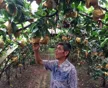
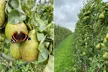
“We are delighted with Xenia sales so far,” says Bernd Feenstra of Xenia Europa BV, which reported a record harvest of 8 million kgs of high-quality, good-sized Xenia pears. The previous year 6 million kgs were harvested. Bernd says the increased revenue is mostly thanks to increased sales to existing retail clients in Northwestern Europe. According to him, these clients started with Xenia sales earlier, which led to higher pre-Christmas sales than in other years.
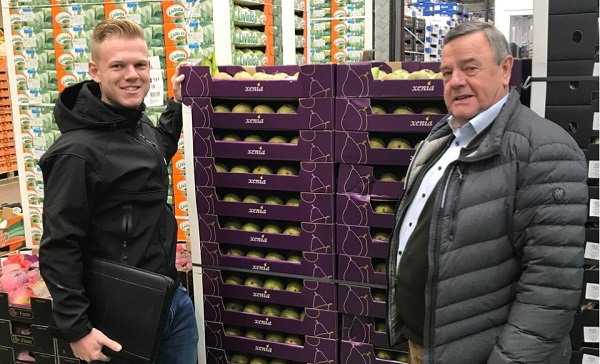
Xenia Europa aims to supply its clients year-round, excluding the summer months. Besides growth among existing clients, expansion with new clients is also being realized. Although the focus lies primarily on Northwestern Europe - these pears are in stores in countries including Germany, Austria, and Scandinavia - sales in the Netherlands have also increased, says Feenstra.
In the Netherlands, three permanent retailers are supplied, and recently, two more retail chain stores have been added. Bernd says the season went well and expects Xenia pears will sell out a month earlier than in previous years, despite the substantial harvest. The organic Xenai segment is also growing, and he anticipates a ten percent expansion in the coming years.
Success factors
Feenstra considers the increasing demand for Xenia as a result of several factors. For example, this club variety works with a fixed price. “Each year, at the start of the season, we determine a price that is used throughout the season. That implies that the price is reliable and predictable. The price has been stable for years now. It may deviate by a few cents, but never more than that.” Bernd adds that although there is no budget for large-scale marketing, the focus is on quality. “That ensures that buyers, traders, and consumers return and are mostly satisfied. "
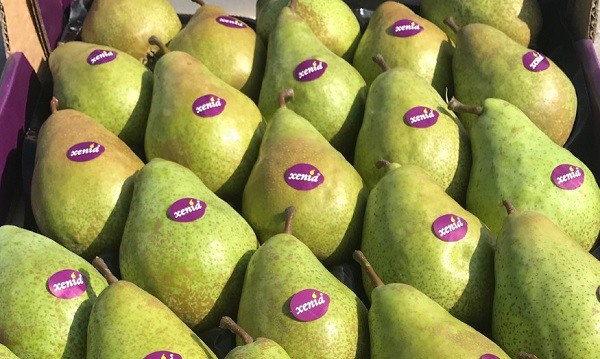
"Quality is also marketing; then, you sell yourself too.” Last year’s pear sales were generally dismal, due to the quality problems caused by heat. That was, however, not an issue for Xenias, according to Bernd. He considers this a reason why more Xenia pears have been sold this year. He also thinks the Xenai’s tart taste and long shelf life are factors in this pear’s success. “This pear can lay in store shelves as well as in homes for a long time. Wastage is, therefore, lower at both the supermarket and at home.”
Do club varieties have a future?
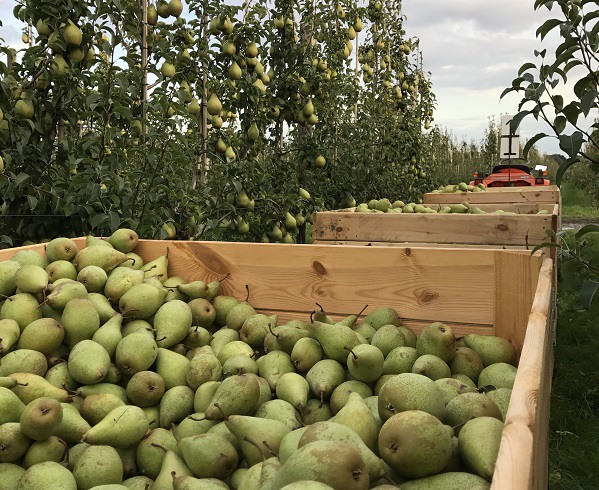
Feenstra thinks a club variety can be an attractive alternative for growers, provided it is managed well. He does, however, warn that club varieties are not sacred. “There are plenty of recent examples of growers earning more with conventional varieties, rather than club varieties.” He has noticed more failed than successful apple club varieties in the Netherlands.
“We have not quite achieved that yet either.” In Bernd’s opinion, the success of a club variety relies heavily on its sales model and the product’s quality. He has determined that, with Xenia pears, the past three years have gone well, but it will only be known in five to ten years if it was a real success. “That is ultimately the only criterion of success - does the grower earn enough?”
Regulated expansion
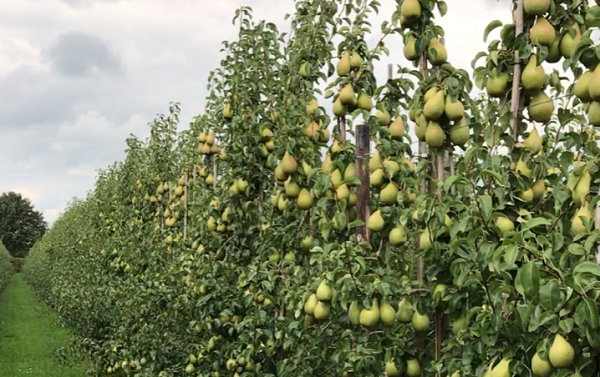
There is currently about 300 hectares of Dutch Xenia production. This acreage should increase slightly in the coming years. It seems this pear is so popular among growers that Xenia Europa currently regulates the growth to ensure a continued stable price level. “Excessive growth would disrupt the carefully developed market and create price pressure. We, of course, want to prevent that.”
Feenstra expects the pear volumes to increase by an average of ten percent a year. “We can handle that in the market, and it is needed to build the market.” Xenia has a particularly strong position in Northwestern Europe and is gradually and steadily expanding its position. For example, this pear is now available in five Austrian supermarkets. Xenia will focus on growth in Southern Europe too. “In countries like Spain, Portugal, and France, growth is certainly possible.”
Besides production in the Netherlands, Xenia pears are also cultivated in other European countries, including Germany, Austria, and France. These are sold via local partners. Bernd adds that the acreage is being expanded overseas in a controlled manner to keep prices at a good level. “We work well together across Europe, and try to assist each other while strengthening the Xenai’s sales market,” concludes Bernd.
More information
Bernd Feenstra
[email protected] Xenia Europa
3 Egelweg
5406 PD, Uden, NL
Tel: +31 (0) 623 177 152
E-mail: [email protected]
Website: www.xeniapear.com