Thin volumes and weather-hit quality in India's pink onion crop are diverting more product into the domestic market this season, while exporters scale back overseas programmes and wait for winter supplies to improve, says Ronit Khasbhage of Plantura Exports LLP based in Maharashtra's Nashik belt. "Our Garwa pink onions have been especially affected by recent heat waves and El Niño. This year, most traders are preferring domestic sales because demand and prices are strong at home, while exports have become more challenging with higher freight and limited quality volumes."
Arrivals of Garwa pink onions from Nashik are down by an estimated 20-30% compared to last season due to the intense heat during the growing period, Ronit explains. The current harvest window for this Garwa crop runs from March to June, and in a normal year, it offers strong shelf life, making it a staple export onion. "But this season the export-quality share is much lower, and a larger portion is going to the domestic market only."
 © Plantura Exports LLP
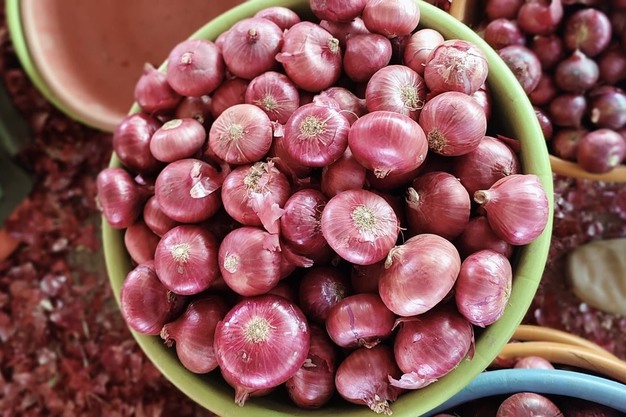
The heat has also compromised a key quality parameter, locally called "Patti," referring to layers of the onion. "Export buyers generally prefer two- and three-Patti bulbs, but this year, single-Patti onions dominate arrivals. Because of the heat wave, the Patti has been damaged," Ronit mentions. "Plantura is trying to manage this by training farmers on sorting and grading, performing pre-stage quality checks, and using cold-storage partners to secure the limited exportable lots."
Export volumes have dropped sharply as a result. Weekly shipments from Plantura have fallen by around 50-60%, from five to six containers in a usual week to just two or three at present. Sri Lanka is currently the company's main outlet, as that market is more flexible on details like Patti as long as there is no physical damage. "Our recent shipment landed at about 120 Sri Lankan rupees per kg. Shipments to Malaysia have mostly been on hold due to quality concerns, and exports to the UAE and wider Gulf have been paused amid conflict and higher logistics costs."
 © Plantura Exports LLP
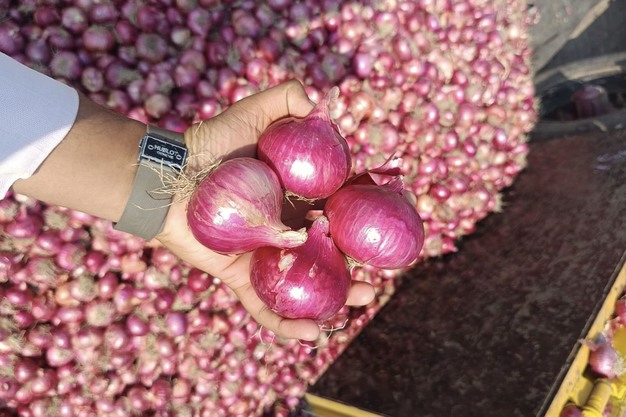
Sizing is another constraint as Gulf buyers typically demand 55 mm onions as a standard export size, while Malaysia prefers "super" bulbs from 55 mm up to 70 mm, Ronit points out. "Right now, there is a quantity crunch for 55 mm; most of the Garwa available is 35-45 mm," he says, expecting size availability to improve only with the winter Kharif crop around November-December.
On the domestic front, strong demand from southern consuming regions is altering traders' moves. "In states such as Kerala and Tamil Nadu, prices for both sambhar and pink onions have risen compared to last year, with markets like Coimbatore moving from around USD 32–36 per quintal to roughly USD 38, and at times up to the USD 53 mark. Most traders prefer domestic trade as it is more hassle-free than export, especially with freight rates having increased."
Looking ahead, Ronit expects the market availability to tighten further as the monsoon approaches. With little additional harvesting anticipated and more stocking by traders, Ronit believes domestic prices are likely to increase, and export activity will remain limited for the remainder of this pink onion season.
For more information:
Ronit Khasbhage
Plantura Exports LLP
Tel: +91 91 12 462 003
Email: [email protected]
www.planturaexport.com
Shriaunsh Shirsale
Plantura Exports LLP
Tel: +91 90 11 454 142
Email: [email protected]
www.planturaexport.com