The case of Catman Fresh S.A. once again highlights the structure of relationships within the European fruit and vegetable sector, especially regarding suppliers' dependence on large distribution groups and the management of long-term commercial agreements.
According to sources close to the company, Catman Fresh's bankruptcy is directly linked to the breach of commercial commitments by the Edeka group, a client that represented approximately 70% of its business volume. This level of concentration would have placed the company in a highly vulnerable operational and financial position.
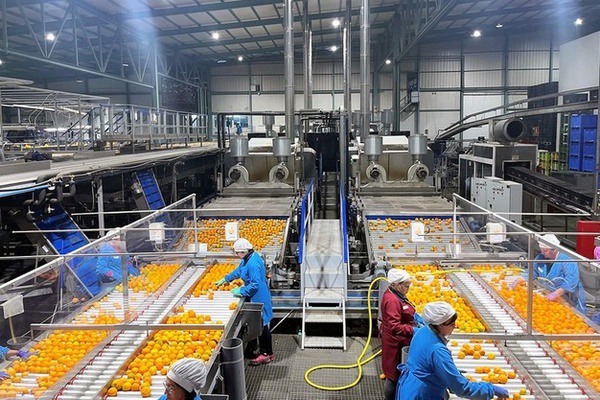 © Catman Fresh
In this context, Catman Fresh has filed a complaint with AICA regarding Edeka's non-payment of overdue invoices totaling more than one million euros. The company maintains that this situation has generated severe cash flow problems, significantly accelerated its financial decline and consequently made it difficult for Catman Fresh to meet its payment obligations.
The same sources point to a significant imbalance in the business relationship, stemming from Edeka's dominant position and its network of suppliers. In this context, a possible abuse of power is alleged, in which Catman Fresh reportedly made significant investments contingent upon strategic agreements with its client.
Specifically, it is indicated that both Edeka and Everest Fresh, a company linked to the group, participated in financing up to 70% of projects aimed at increasing production capacity, including investments in key machinery to achieve the required packaging levels. According to these reports, this financing was subject to conditions that the company considers to be onerous and which, in its view, may have served the financial interests of the financing party.
Simultaneously, attempts were reportedly made to reach agreements for the exclusive development of new citrus varieties and their planting on specific farms. However, these developments allegedly failed to materialize, leaving the company with committed investments and no return.
Given this situation, Catman Fresh is reportedly considering legal action and reporting the matter to the relevant authorities in Spain, Germany, and the Netherlands, as well as within the European Union.
The combination of structural dependency, conditional financing, induced investments, and unfulfilled commitments has triggered a domino effect with irreversible consequences for Catman Fresh.
This case opens a necessary debate within the sector regarding the limits of the relationship between distribution and production, as well as the urgent need to establish protection mechanisms for suppliers against situations of extreme imbalance.
Pending possible clarifications from Edeka and its affiliated companies, or any legal action, the Catman Fresh case stands out as a significant example of the risks associated with the concentration of power in the fruit and vegetable supply chain.
For more information:
Sergio Orobal
Catman Fresh
Email: [email protected]
www.catmanfresh.es