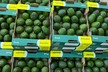
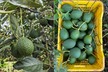
Global demand for mangoes is expected to remain firm in 2026, led by the United States, one of the largest importers. Imports into the U.S. are projected to grow by around 7%, supported by per capita consumption of about 3.6 to 4 kg, retail promotions, and year-round availability, according to APEDA. Supply conditions vary. Peru's production is expected to decline by around 10% due to delayed flowering and weather disruptions, while Pakistan's exports may fall by about 8% due to quality rejections. Mexico remains a key supplier to the U.S., although it faces weather and market access constraints.
India, the largest mango producer, is expected to see a marginal increase in production in 2026, supported by productivity gains in Karnataka and Andhra Pradesh. However, its share in global fresh exports remains limited due to logistics and shelf-life constraints.
Fresh mango exports depend on speed and temperature control. The fruit has a short shelf life and is sensitive to transit conditions. For long-haul routes such as India to the U.S., air freight remains the only viable option, as sea freight is not suitable due to transit time.
India's long-haul air cargo flows are linked to Middle Eastern transit hubs, which provide connectivity to North America. Disruptions in this region continue to affect exports. Although the Middle East conflict has ended, airlines are still adjusting routes, which has increased fuel use and operating costs. Freight rates remain elevated, and capacity is constrained.
Exporter feedback indicates ongoing operational uncertainty, including tighter connections and reduced flexibility. In this context, Kaybee Exports began its season with its first U.S. shipment on 28 March from Mumbai to San Francisco, with volumes dependent on freight rates and capacity.
"The biggest challenge has been the sharp rise in freight costs along with operational uncertainty," said Kaushal Khakhar.
Freight rates from India to the U.S. increased from around ₹350 (US$4.20) per kg last year to about ₹500 to ₹550 (US$6.00–6.60) per kg this season, driven by higher fuel costs. "While sectors like pharma can absorb such increases, mango exports are extremely price-sensitive, making this the single biggest challenge this season," Khakhar said.
Exporters are also facing tighter capacity as airlines prioritise passenger baggage and higher-yield cargo, increasing the risk of delays.
"We continue to depend largely on Gulf hubs, though routings have become more flexible," Khakhar said. Direct India to U.S. flights are being evaluated, but cannot replace hub-based routes due to limited capacity.
"We are mitigating this through tighter packhouse controls, strict temperature management, and faster cargo handovers to preserve quality and shelf life," Khakhar said.
"For US-bound mangoes, air freight remains the only viable option," Khakhar said.
Global mango exports are expected to grow by around 8 to 9% in 2026, but export performance will depend on freight rates, capacity, and transit reliability.
Source: The Stat Trade Times