Tomatoes are moving through a moment where the usual seasonal patterns no longer tell the full story. Across key producing regions, supply is increasing, but so are the variables shaping how that supply behaves once it reaches the market. Weather disruptions earlier in the year, delayed plantings, and uneven production cycles are still influencing availability, even as volumes begin to build. Prices are easing in some areas, holding firm in others, and in a few cases still reflecting earlier shortages.
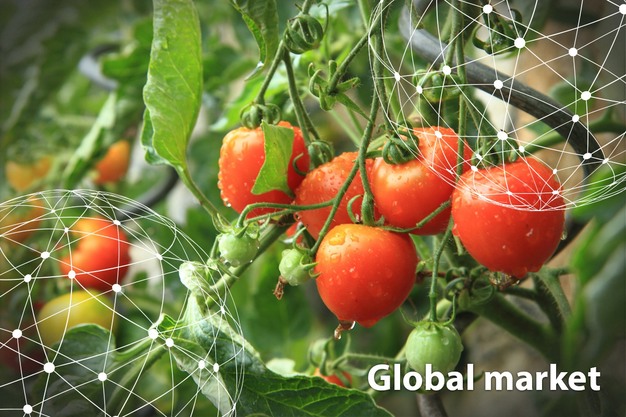 © Viola van den Hoven-Katsman | FreshPlaza.com
At the same time, the market is being shaped by factors beyond the field. Energy costs, greenhouse strategies, and shifting trade flows are influencing competitiveness between regions, while consumption patterns continue to evolve. The result is a market that is not moving in a single direction, but adjusting across multiple fronts at once, where timing, origin, and production method are playing a larger role in how supply translates into price.
Italy: Tomato prices ease after early April peak
Following the peaks reached in recent weeks, tomato prices are declining. A wholesaler at the Milan market reports that volumes arriving from Sicily, the main production area, are increasing. On Monday, 20 April 2026, cherry tomatoes were priced at €3.50–4.00/kg, down from €6.00/kg two weeks earlier. Plum tomatoes were priced between €4.50 and €5.00/kg, while beefsteak tomatoes were priced at €3.00/kg. Well-presented, top-quality vine tomatoes were sold at €2.00/kg. However, the same variety sourced from the Netherlands was quoted at around €2.50/kg. The overall trend is therefore one of declining prices following the peaks seen in the first two weeks of April.
According to YouGov data, 92% of Italian households purchase tomatoes. Purchase frequency is also increasing, with the number of purchases per household per year expected to exceed 20 by February 2026. However, other behavioural indicators, such as average spend and quantity purchased per transaction, show a slight decline. Supermarkets and discount stores perform best as distribution channels, while hypermarkets, specialist fruit and vegetable shops, and traditional markets show a slight decrease.
Germany: Domestic supply increases despite delays
In late March and early April, the tomato harvest gained momentum in many greenhouses across Germany. However, several growers planted later due to high energy prices and will therefore begin this year's harvest at a later stage. Despite a lack of sunlight in February, crops are generally in good condition, and the outlook for yields and quality has so far been positive. It is reported that all tomato varieties are already available for supply to food retail chains.
Meanwhile, wholesale markets continue to offer a wide range of produce from the Netherlands, Belgium, Spain, Turkey, Italy, France, and Morocco. Over the past two weeks, both price decreases and increases have been observed. In general, prices have remained significantly above the level seen in the same period last year.
In the longer term, tomato consumption in Germany is showing a gradual upward trend. Locally grown cocktail and cherry tomatoes, in particular, are gaining popularity, according to one grower. The same applies to less common varieties such as Coeur de boeuf tomatoes.
The Netherlands and Belgium: Dry spring supports strong price levels
The first half of spring in the Netherlands has been characterised by dry and sunny conditions. Sunshine hours were above average, while rainfall remained below normal levels. In unlit greenhouse crops, production is steadily gaining momentum, while lit crops are approaching the end of their cycle. As solar radiation intensifies, the number of supplementary lighting hours is declining.
Challenges in import-grown production are currently supporting local growers. Prices have risen sharply since early March and have remained at elevated levels. By mid-April, price levels were still well above the five-year average, according to data from auctions of the Belgian Federation of Horticultural Cooperatives. Growers note that production costs have also increased in recent years, meaning the final balance varies from company to company. Differences are also visible between tomato segments. For instance, prices for loose round tomatoes did not increase in March, according to figures from the European Commission.
Beyond tomato sales, energy trading has become an increasingly important income stream for growers. Revenue from electricity sales now accounts for approximately 21% of total income on an average Dutch glasshouse vegetable farm, according to 2025 figures.
Despite challenges related to rising energy costs, substantial levels of supplementary lighting were used again this winter in Dutch and Belgian greenhouses. Many growers have switched to LED lighting systems. One ongoing challenge is achieving optimal product quality, including preventing uneven colouring in tomatoes. Considerable research is currently focused on this issue. At the same time, growers are increasingly adopting ToBRFV-resistant varieties. These varieties can show different growth characteristics compared to traditional types, often being slightly more vegetative and somewhat less productive than their non-resistant predecessors.
A continuing trend is scale expansion. The clear leader in terms of cultivation area is Agro Care, particularly following its merger with CombiVliet, although other growers are also expanding. Several companies have completed new greenhouse construction or are currently building new facilities this year. In Belgium, the largest cooperative, BelOrta, reported a 6% decline in tomato area for 2026. In the Netherlands, the tomato area increased by 180 hectares in 2025 to a total of 1,910 hectares. Alongside domestic expansion, growers are also expanding operations in regions such as North Africa. Building new greenhouses domestically is becoming increasingly challenging due to regulations and high costs.
Turkey: Export growth continues amid competitive advantage
In 2025, Türkiye exported tomatoes worth €401,193,000 to 51 countries. Revenue from tomato exports in the January–March period of last year amounted to €161,183,000, increasing by 11.8% to €180,163,000 in the same period this year. This year, Romania became the largest export destination. Between January and March, Türkiye sold 42,766 tons of tomatoes to Romania, followed by Russia with 27,263 tons and Ukraine with 16,776 tons.
Turkish tomatoes hold a strong position in international markets. Driven by quality, sustainable cultivation, and modern greenhouse investments, export performance is improving year by year. Increasing demand in the European market, particularly in Romania, along with continued demand from key buyers such as Russia and Ukraine, provides a clear advantage for the Turkish tomato sector.
The conflict in the Middle East is contributing to higher production costs in Europe. For greenhouse growers abroad relying on natural gas, these increases are making operations more difficult to sustain. Türkiye, however, benefits from geothermal resources, giving it a notable cost advantage in production. The widespread use of geothermal energy strengthens Türkiye's competitiveness, particularly in the greenhouse sector.
France: Prices ease as supply increases
The French tomato market has recently entered a phase of declining prices, observed since last week, following an extended period of unusually high and firm pricing since the beginning of the year. This situation was largely driven by limited competition from other origins, particularly Spain and Morocco, both of which were heavily affected by adverse weather conditions. These climatic disruptions resulted in significantly reduced volumes and inconsistent quality, allowing French tomatoes to secure a strong position on retail shelves without facing substantial competitive pressure.
Overall, the market remained relatively tight in the first months of the year, with demand slightly exceeding supply. Although French production was generally well aligned in terms of quality, available volumes were somewhat limited, contributing to sustained high price levels. However, with the gradual arrival of larger volumes, both from domestic production and competing origins, the market is now adjusting. This increase in supply is leading to a downward correction in prices, a trend considered typical for the season.
Spain: Prices ease after supply-driven surge
The tomato season in Spain's main producing areas, particularly Almería, saw a major shift from March onwards. As spring arrived and temperatures increased, tomato prices surged to around €3 per kilo for certain varieties, such as plum tomatoes, due to an unprecedented supply shortage at key points in the season. This was caused by fungal diseases linked to excessive rainfall in January and February, as well as the impact of pests such as the Tomato Brown rugose fruit virus (ToBRFV). The series of storms and intense cold at the start of 2026 in southeastern Spain also slowed plant growth, significantly reducing yields per square metre.
As a result, volumes in March were reduced by more than half. Supply was not only limited in Spain, but also in other Mediterranean countries such as Morocco and Italy, while the Netherlands had not yet reached significant production volumes. Demand far exceeded supply throughout March and April. In the past week, prices have declined rapidly, although they remain at relatively high levels.
North America: Supply tightness eases slightly
Following the Florida freeze earlier this year, supply is improving slightly, but it remains well below normal levels. Availability is particularly tight for round and Roma tomatoes, with limited volumes still coming from Florida and Mexico. The shortage of round tomatoes has driven increased demand for Roma varieties as a substitute, including in foodservice.
Availability is expected to improve as new fields and crops come into production in both regions, with areas such as Georgia and California set to come on stream closer to June.
Grape tomatoes remain relatively plentiful, with a stronger supply coming from Mexico. This crop was less affected by the Florida freeze, and supply currently exceeds demand, resulting in softer prices.
Meanwhile, greenhouse production of tomatoes on the vine (TOVs) and beefsteak tomatoes, particularly from Canada and Mexico, has increased to help offset the supply shortage, although it has not fully met demand. Markets for greenhouse tomatoes have strengthened considerably. While beefsteak tomatoes are typically priced at €10–€15 per box, they are currently closer to €40–€45 per box.
South Africa: Seasonal transition supports firm tomato prices
Summer tomatoes in South Africa are emerging from a challenging period marked by heatwaves in the Cape and persistent rain and overcast conditions in the north. "Over the past two months, we saw poorer quality and smaller sizes," says a municipal market agent. "Since last week, volumes have started tapering off as the Western Cape season comes to an end. This is the time of year when the winter production areas in the subtropical north begin to ramp up."
Summer plantings from December were affected by flooding, which may impact early winter volumes. "Later in the winter, from July and August, there should be sufficient tomato volumes if current plantings are not affected by the heavy rain and cloudy conditions seen this summer."
Prices are currently firm, ranging between €1 and €1.3 per kg for saladette and Roma tomatoes, and €1.7 per kg for salad tomatoes, levels that allow for a margin for farmers. The upcoming long weekend typically supports increased demand for tomatoes.
Morocco: Export growth driven by segmented tomatoes
Morocco's tomato exports have reached a new milestone in the 2024/2025 campaign, with shipments climbing to a record 745,000 tons. This marks an 80% increase over the past decade, firmly positioning the country as the third-largest supplier to the European market, behind Spain and the Netherlands. The 2025–26 season is under pressure due to climatic challenges, and exports are expected to be slightly lower than last season. Growth has been largely driven by a significant shift in the product mix. Segmented tomatoes, such as cherry, baby plum, and specialty varieties, now account for nearly 59% of total exports.
"The real transformation in the sector is the move upmarket. It's no longer just about volume, but about value and differentiation," says an operator from the Souss-Massa region. With more than 400,000 tons exported and a 35% increase over the past two years, segmented tomatoes have become the backbone of Morocco's competitive edge.
France remains by far the largest declared destination, absorbing more than half of Moroccan tomato exports. However, this is somewhat misleading, as Perpignan primarily serves as a redistribution hub, with significant volumes subsequently re-exported to Germany, Scandinavia, Austria, and other Northern European markets. According to AMI statistics, Germany's share has doubled from 9% to 18% over the past five years. When factoring in re-exports via France, Morocco is now estimated to supply around 50% of the baby plum tomatoes sold on the German market.
Next Topic: Asparagus