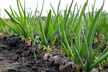
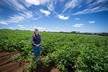
Onion farmers in Bernard Lodge, St Catherine, are reporting losses as increased local production coincides with continued imports, leaving crops at risk of spoilage. More than 15 farmers are adjusting prices to recover costs while calling for changes to import timing and market coordination.
Jorn Bennett, who has three of his 10 acres (1.21 of 4.05 hectares) ready for harvest, said he is facing potential losses of just under J$3 million (US$19,000) if he cannot secure buyers. "We plant with the expectation of selling our produce in the local market, around about February/March, normally the imports would stop so that the local farmer can get a chance to sell their produce," he said.
Imports have continued during the harvest period, placing pressure on prices. Bennett invested more than J$2.25 million (US$14,250) in his three-acre (1.21-hectare) plot. Imported onions are retailing at about J$5,000 (US$32) per 50-pound bag, while local onions need to reach around J$7,500 (US$48) per bag to cover costs.
"It is a survival mode right now, my plan is to try and break even so I can go again next year, so if I have to match the imported onion price, I will have to do it, better than have everything spoiling," Bennett said.
National production has increased in recent years. Area harvested rose from 65 hectares in 2018 to 290 hectares in 2023 and remains above earlier levels. This has resulted in a higher supply that is sensitive to market timing.
Farmers also point to structural constraints. Without mechanisation or scale, production costs remain higher. Bennett typically harvests about 45,000 pounds (20.4 tons) per acre and sells at J$170 (US$1.08) per pound, but may need to reduce prices to between J$90 and J$100 (US$0.57 to US$0.64) per pound.
Post-harvest handling is also a factor. Limited storage capacity affects the ability to manage supply over time, while imports continue to fill market gaps. Farmers say the overlap between imports and local harvest increases pressure during peak supply.
Dale Lopez, with two acres (0.81 hectares) ready for harvest, said he will need to adjust prices to avoid losses. Imported onions are priced between US$7 and US$10 per 50-pound bag at origin, contributing to price differences in the market.
Lopez called for coordination of import timing and suggested exploring regional markets to absorb surplus production. The Rural Agricultural Development Authority said it is working on market facilitation, technical support, and storage partnerships following increased production levels.
Farmers also raised concerns about pricing along the supply chain. "Something needs to be done about this, because the vendors will buy at the rate we are required to sell and then mark up sometimes 50 to 80 per cent and blame the farmers for the high price," said Laytoya Johns.
Source: The Gleaner