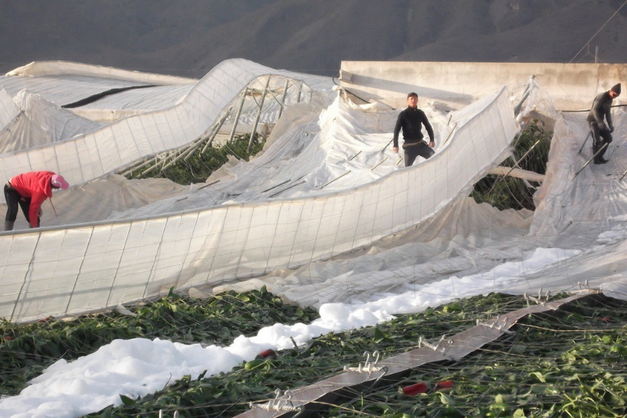
In Southern Europe, severe storms and heavy rainfall are putting pressure on organic fruit and vegetable supplies. According to Dutch produce wholesaler Udea, the harvesting of crops like bell peppers and tomatoes has been disrupted, and greenhouses and transportation infrastructure have been damaged. In the Dutch market, this affects availability, prices, and quality. "Supply is up and down, and sometimes limited. We're not seeing empty shelves, but we must be more flexible regarding varieties and quality," says fresh produce coordinator René Oosting, highlighting the impact.
Are extreme conditions the new normal?
René says the recent weather conditions are unusual, but not unique. "We increasingly encounter extreme weather, not only in Spain and Italy, but also in other growing regions." That has considerable consequences: Crop losses, damaged greenhouses, and a shorter shelf life due to high humidity. "It's hard to predict what will be available and how long products will last," says René. The extremes catch even experienced growers off guard. They could invest in sturdier greenhouses, but that is costly and doesn't yield higher returns immediately.
 © Udea
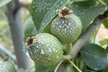
Damage caused by extreme weather in southern Europe
Those disruptions mean higher prices and inconsistent quality. "When there's a shortage in the conventional market, organic products are also snapped up." That could place even greater pressure on supplies. And prices are rising noticeably. "Cucumbers should be about €0.60 more per piece," explains René. To ensure availability, they sometimes accept non-standard sizes.
Grower partnerships are key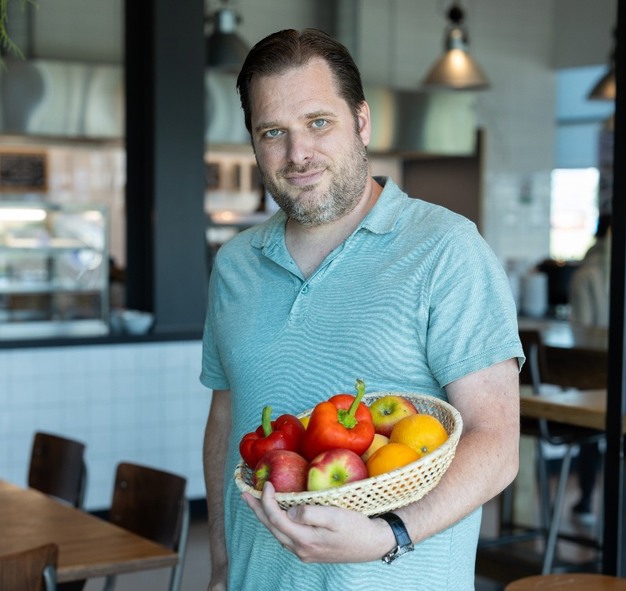 © Udea
Udea is highly committed to long-term relationships with growers. "No short-term contracts, but collaboration spanning several years." That gives growers the certainty they need to invest, for instance, in greenhouses and cultivation methods. Along with sales guarantees, Udea supports its growers by sharing knowledge and practical help. Examples include exchanges among growers and investments in sustainable technologies, such as solar panels and drip irrigation on plantations. "It's about offering perspective and building a future-proof cultivation system together," says Oosting.
Lessons for the sector
The situation highlights the need to adapt to climate change. "Extreme weather is becoming more common. The sector must work together to increase its resilience." Open communication between growers, traders, and retailers is vital. René also advocates for less rigid distinctions between organic and conventional to facilitate better knowledge sharing.
These disruptions bring the choice between imports and local production into sharp focus. "If imports don't meet our sustainability standards, we sometimes deliberately opt not to use them," René points out.
 © Udea
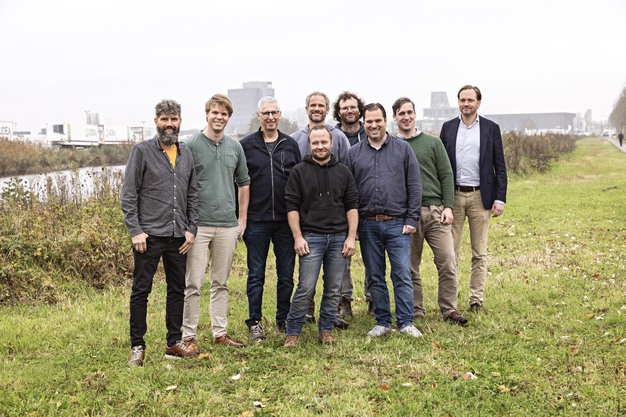
Rene Oosting of Udea, together with organic farmers
Positive signs in the Netherlands
There are, however, positive developments in the Netherlands. "Leafy greens, asparagus, and cucumbers are doing well." Local production thus serves as a crucial buffer. According to René, the future lies in balance: global cooperation along with strong local cultivation. "Flexibility, partnerships, and long-term thinking are more important than ever," he concludes. (JG)
For more information:
Udea
De Kempkens 1000
5465 PR Veghel
Tel: +31 (0) 413 256 700
[email protected]
www.udea.nl