The numbers speak for themselves. "By 2035, Houston will overtake Chicago as the 3rd largest city in the U.S. At a time we're seeing states in the U.S. lose population, Texas is still growing at 1000 new citizens per day," says Dante Galeazzi, president of the Texas International Produce Association.
With those numbers as the backdrop, it's easy to understand why there's an increasing push to raise the profile of Port Houston as a significant point of passageway for fresh produce imports and exports.
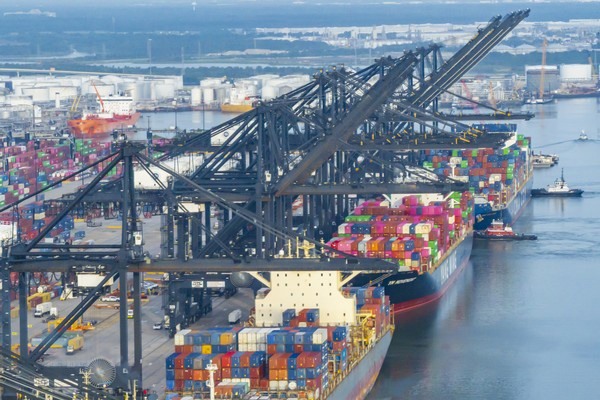
This initiative isn't new per se. "In the last 15 years, we have been promoting the region as a reefer destination to all our stakeholders involved in the supply chain," says Ricardo Arias, Port Houston trade development manager. With that, the port has attracted investment in refrigerated warehousing in the region and it's also pursued and achieved the Cold Treatment designation for the port. That's allowed the port to increase shipments in fruit particularly needing that treatment such as citrus but also grapes and blueberries from Peru.
 © Port Houston
Future developments at the port
The port is also in the early steps of adopting artificial intelligence (AI) for applications in fresh produce. "It's not hard to see where these systems can be valuable especially in reducing tedious data processing or easily cross-referencing and transferring data between platforms," says Galeazzi, noting for example that one efficiency could be hours saved when these systems "talk" to each other seamlessly. "So even before you read your email, AI is pulling data from your shipping updates or manifests from customs brokers, and inputting them to your native platforms for truly real-time information."
This comes at a time when, as those earlier numbers indicate, the region is growing. "This growth reflects both an opportunity for companies to reach more consumers within fewer miles, as well as the modernization of infrastructure that comes with that growth," says Galeazzi, adding that companies entering the Houston market at this time will be able to reap those benefits in the years to come as the city around them grows. "Plus, it helps that Texas sits in the middle of the country and is able to reach any point in the US within four days by truck."
However, what does this news around development within the region and the port mean to growers and shippers? Kim Flores, Pro Citrus Network / Foremost Fresh Direct VP business development says that Texas is an important region for both of its organizations.
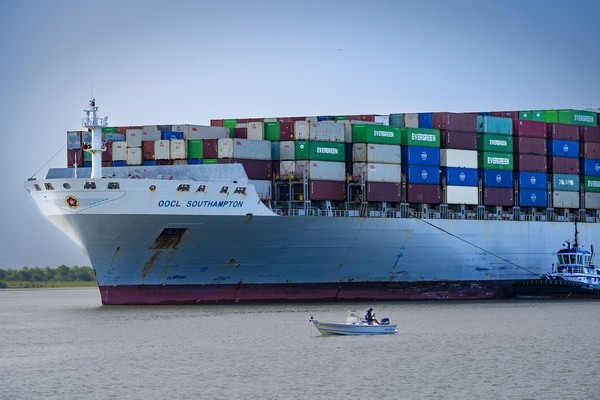
"In the mid-2000's as PCN began cultivating relationships in the fresh sector, we identified a strategic growth opportunity in Texas with imports, to ensure year-round availability for continuity with our domestic production," says Flores. "We were the first to import citrus into Port Houston and have continued to grow year over year, outgrowing several facilities." Then, in 2020, it opened its own cold storage and logistics facility Foremost Fresh Direct in Baytown/East Houston.
 © Port Houston
Growth in Texas and the port
"Year over year, as Texas continues to grow in population, with that comes opportunities to increase and improve access to fresh produce, which is the biggest win overall for consumers," she says. "Our close working relationship with Port Houston is key to delivering fresh produce to the Texas marketplace faster and fresher." With the growth of imports through Port Houston, it's not only beneficial to Texas but growth also provides increasing access to the Gulf Coast and the Midwest, as well as a central point to receivers across the U.S. and even into Canada.
Growth of course can come with its challenges and one of them is that as the port becomes more digitized and integrated, the bigger the target fresh produce operations become for cybersecurity incidents. "Perishable products have a limited shelf-life, and cyber-criminals could expose that urgency by taking these systems hostage and demanding payments. I think it will be important for our industry to both adopt AI, while paralleling that growth with strong best practices for internal security practices as well as investments in cybersecurity defense," says Galeazzi.
Looking ahead, what's next for import management at Port Houston? While it's speculative, Galeazzi points to the predictive quality forecasts on fresh produce arriving by boat. "With enough data collection coming from fields, packing facilities, transit conditions, logistics patterns, and so on, it would not seem a far reach that all that data could build fairly accurate models that would help importers understand ahead of arrival exactly what the quality metrics of the incoming shipment would look like," he says.
In turn, this would help the industry more accurately determine what quantities should be divided up among the customer base, and hopefully reduce outages or allow for problem solving while the fruit is still in transit.
In addition, with the growth at the port and the attention to refrigerated cargo, some may think this is a disadvantage. "We believe the opposite is true. This is an opportunity for the Port to invest in modern technologies that other ports won't have," says Galeazzi. "This is an opportunity to use their experiences and successes from the growth of other sectors to create the most efficient systems possible for refrigerated cargo. This is also an opportunity to tap into the many partners growing Houston and its business sectors to ensure that fresh produce, food and logistics are all considered in the future plans of the city."
 For more information:
Ricardo Arias
Port Houston
Tel: +1 (713) 670-2552
[email protected]
https://porthouston.com/