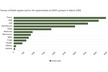
According to figures published by the National Agricultural Marketing Council, global tomato production exceeded 180 million tons in 2023, with China accounting for more than 70 million tons. India, Türkiye, and the U.S. follow as major producers, reflecting the crop's role in both fresh and processed markets.
Tomatoes are traded through two streams. Fresh tomatoes are perishable and sensitive to handling and logistics, while processed products such as paste and canned tomatoes are more stable and suited to export. Countries such as Italy and Spain have strong positions in processed exports, while Mexico supplies fresh tomatoes to the U.S. Across both segments, supply chain efficiency and cold chain management influence market access, quality, and pricing.
Temperature control remains a key factor in the fresh segment. Optimal storage and transport conditions range between 12°C and 15°C. Lower temperatures can cause chilling injury, while higher temperatures accelerate ripening and decay. As trade distances increase and retailers require year-round supply, investment in refrigerated transport, post-harvest cooling, and monitoring systems is increasing.
South Africa reflects these dynamics on a smaller scale. The country produced just under 528 000t of tomatoes in 2023, with a five-year average of around 540 000t. Production varies due to weather, water availability, and input costs. Tomatoes account for about 24% of total vegetable production, second to potatoes, and the sector employs between 25 000 and 28 000 people annually.
Production is concentrated in Limpopo, which contributes more than 60% of national output. Large-scale producers dominate, led by ZZ2, which plants between 2 000ha and 2 500ha annually and accounts for more than 30% of national production.
"Maintaining quality after harvest is just as important as how the crop is produced," a ZZ2 spokesperson said. "Once tomatoes leave the field, temperature control, packaging and transport conditions determine whether they arrive at market in a premium condition or suffer losses that affect shelf life and price."
Post-harvest handling remains a key risk to returns. Research by the University of KwaZulu-Natal's Post-Harvest Innovation Centre found that transport on rural roads is the largest contributor to damage. Poor road conditions result in bruising, structural damage, and exposure to non-optimal temperatures.
These effects are reflected at the market level. RSA Group CEO Jaco Oosthuizen said tomatoes with bruising or uneven ripeness are downgraded. "In weeks of high supply, even small quality defects can translate into significant price pressure for producers," he said.
The study found that tomatoes transported in large bins ripened faster and sustained more damage than those in cartons. Interventions such as harvesting at the correct maturity, using smaller containers, refrigeration and improved driving practices can reduce losses.
As trade becomes more complex, the link between production, logistics, and pricing is tightening. For South African producers, performance depends on both yield and the ability to maintain quality through the supply chain.
Source: Farmer's Weekly