Chile's grape season is ramping up, but export volumes have been adjusted downward from their original estimates. Altogether, the country is expected to ship 63 million cases, a 6.4 percent decline from last season. Earlier in the season, northern regions experienced some weather disruptions, including rainfall events followed by heat waves. "While not severe, these conditions affected the initial pace of the campaign, leading to slight delays and some loss of exportable volume, particularly in certain green varieties," says Omar Farronay with Agrifruits.
Just last week, the central part, Chile's main grape growing region, experienced rain as well. "It is not entirely clear what the full extent of the rain will be," he added. "However, it could cause quality issues, reduce shelf-life and reduce exportable volume."
North America key market
North America remains the main destination, but volumes are slightly down this season, mainly due to lower overall supply from Chile. Due to this tighter availability, the market has remained relatively stable. Europe is also a critical market, but there is more competition from other growing countries, particularly from Africa, which has strengthened its position in recent years. "Demand from Asia has been showing a significant decline," said Farronay. Volumes are down 13 percent compared to last season as it is more complicated and unpredictable to export to Asia, increasing the risks for shippers.
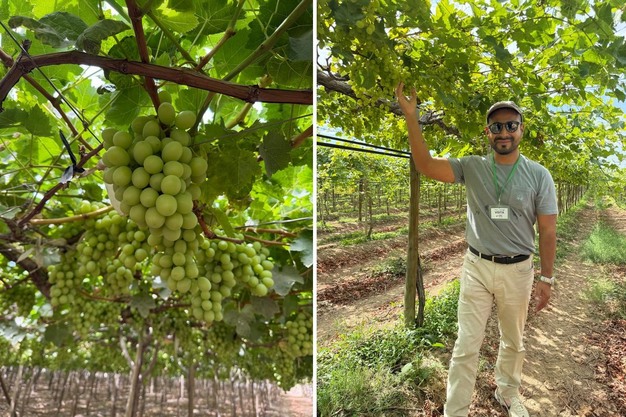 © Agrifruits
Growth within Latin America
The Latin American continent is an important growing market for Chile. Last year, Latin America represented about 9 to 10 percent of Chile's export volume, but this year that number is up to 15 percent. The benefit of shipping within Latin America is that transit times are shorter. "Product arrives fresh and in great condition." Mexico is the main buyer from Chile until its domestic season starts. In addition, Honduras, Colombia, and Guatemala are important markets.
Following Peru, Chile has also been focusing on varietal renewal lately. Right now, about 70 percent of grapes are new varieties such as Sweet Globe™ and Autumncrisp®. "These new varieties are more productive and of higher quality and play an important role in Chile staying competitive in the market," Farronay commented.
Chile is natural extension
For Agrifruits, this marks the company's second year actively handling and commercializing grape programs from Chile. Having built a strong base in Peru over the past five years, the company is now expanding its Chilean program as part of a broader, long-term strategy. "Chile is a natural extension of our Peruvian operations," Farronay explained. "It allows us to extend the commercial window and provide our clients with a more consistent and reliable year-round supply." By combining both origins, Agrifruits is able to offer longer availability, greater varietal diversity, and consistent quality across key markets, including Europe, Asia, and an increasingly important Latin America. This approach also enables the company to respond more efficiently to market demand, particularly in regions with shorter transit times, where freshness and flexibility are key.
 For more information:
Omar Farronay
Agrifruits Holdings
[email protected]
https://agrifruits.us/