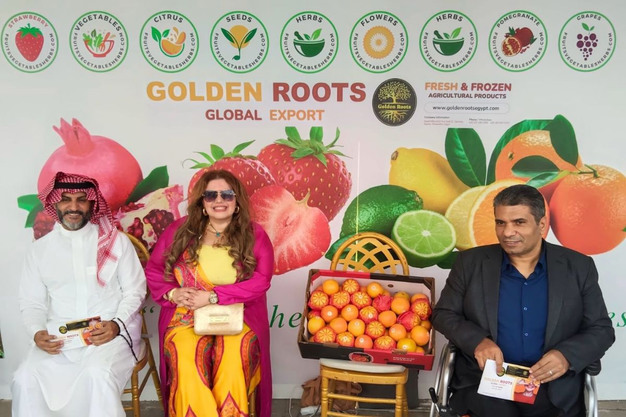
While the war in the Middle East continues to complicate logistics and lengthen transit times, Egyptian orange exporters are managing to hold their own, thanks to strong demand that defies logistical challenges and their experience in maintaining freshness through long transit times, gained during a prolonged crisis in the Red Sea over the past two seasons. "We are proving again that Egyptian exporters can remain strong and competitive, even in times of global crisis," says Reem El Rahmany, CEO of Golden Roots Global Export.
"First of all, we are deeply saddened by the war and its painful consequences on the people and the economy," El Rahmany says. For her, the recent disruptions at the port of Salalah illustrate the immense pressure being placed on the region. "In these difficult times, we are navigating a 'global supply chain crisis.' With ships forced to sail around the Cape of Good Hope, the importance of Egyptian infrastructure, such as the SUMED pipeline, becomes clear. It provides a strategic alternative for securing energy supplies and helps limit the significant increase in transportation and production costs. Egypt's geographical location is another decisive asset that enabled us to quickly switch to land transport to maintain supply on the Gulf market," she adds.
 © Golden Routes
According to El Rahmany, the Egyptian orange industry held strong thanks to the quality of its fruit and its tried-and-tested methods, whereas other crops had to be processed. She explains: "Crops that depend on fast delivery to maintain their quality are the most affected. In our company, we have taken proactive measures by focusing on agricultural processing and frozen (IQF) products. Transforming a perishable crop into a strategic product that can be stored for months is our 'protective shield'. This strategy neutralizes the threat posed by long transit times caused by rerouting through the Cape of Good Hope."
Oranges, on the other hand, have shown great adaptability and resilience, according to the exporter. "Since early March, at the height of the Egyptian orange season, we have been facing a 'container shortage' due to delays in maritime deliveries. However, our exports never stopped. We were able to rely on land transport as an essential alternative to reach the Gulf market. Although this resulted in a 30% to 50% increase in shipping costs, we prioritized the delivery of our products fresh and on time. We have proven that quality is our safety net; with such high costs, importers have selected only products they can trust 100%. This has strengthened the position of Egyptian oranges as the first choice in the Gulf, despite all the logistical challenges," she adds.
This flexibility is even more important when it comes to reaching Asian markets, now that the Chinese navel orange season, which has been fiercely competitive this season, is coming to an end, finally giving the Egyptian campaign an effective start in Asia. "Reaching East and South Asia now means adding at least 15 extra days of shipping. This long transit time puts tremendous pressure on the efficiency of our cold chain. To overcome this, we now rely on advanced cooling technologies and rigorously select fruit that meets specific technical standards so that it can withstand the journey. It is the quality on arrival that sets us apart; a professional exporter is one who delivers products as fresh as if they had just been picked, even after a long journey around the African continent," El Rahmany continues.
The test that lies ahead for Egyptian exporters is managing oversupply in Europe, as turning to the European market is the easy option for many exporters. This outcome cannot be ruled out despite continued shipments to the Gulf and Asia, according to El Rahmany. "This scenario is very likely due to the route changes, but we see it as an opportunity to reposition ourselves. We are not just pushing volumes into Europe; we are also targeting closer geographical markets to reduce the impact of delays. The real solution to avoid oversupply is increasing 'added value.' Instead of exporting raw materials, we are moving toward processed and canned products. This gives us 'staying power' and makes us less vulnerable to the fluctuations of shipping routes," she concludes.
For more information:
Reem El Rahmany
Golden Roots Global Export
Tel: +20 12 72901260
Email: [email protected]
www.goldenrootsegypt.com