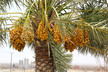
Tanzania is advancing efforts to develop date palm cultivation into a commercial crop as part of a strategy to address drought, food security, and rural income generation. The move follows validation of a Draft Agricultural Training Manual on Date Palm Production in Tanzania, aimed at transitioning the crop from scattered traditional growth to structured commercial farming, particularly in semi-arid regions.
The Food and Agriculture Organisation of the United Nations, in partnership with the Tanzania Agricultural Research Institute, convened a two-day validation workshop in Dodoma, bringing together agricultural experts, policymakers, and extension officers to review the manual.
The initiative is implemented under the project titled 'Emergency and resilience-building support for smallholder farmers affected by drought through exploratory date palm cultivation in Tanzania,' financed by the King Salman Humanitarian Aid and Relief Centre.
TARI Mlingano researcher and National Project Coordinator for date palm farming, Dr. Nicholaus Kuboja, stated that although date palms grow in Dodoma, Singida, and Tabora regions, the crop has not been commercially developed.
"Date palm farming is new in its structured form. The crop exists, but it has not been cultivated scientifically or commercially. This project is about turning that potential into real economic value for Tanzanians," he said.
He added that changing climate patterns and recurring drought conditions position date palm as an alternative crop suited to dry environments.
The manual was developed in collaboration with the Ministry of Agriculture and institutions, including the National Irrigation Commission, Tanzania Official Seed Certification Institute, Agricultural Seed Agency, and Tanzania Fertiliser Regulatory Authority.
"It will serve as a national guide for extension officers, researchers and farmers across the entire date palm value chain, covering seed selection, irrigation, fertiliser application, harvesting, quality standards and marketing," Dr Kuboja said.
FAO technical specialist Tabu Likoko noted that Tanzania currently produces dates in limited quantities without structured commercial systems.
"Date palms can grow in many parts of the country, but producing high-quality commercial dates requires adherence to specific standards and proper management practices. That is why this guideline is critical," she said.
The manual is expected to function as a training tool for farmers in drought-affected areas, supporting crop diversification and climate adaptation.
During a visit to the FAO project site at TARI Chambezi Subqstation in Bagamoyo, Saudi Arabia Ambassador to Tanzania Mr Yahya bin Ahmed Okeish, stated, "We will continue providing technical assistance and empowering farmers to ensure Tanzania produces high-quality date palm products."
FAO Country Representative Dr. Nyabenyi Tipo stated that collaboration with Saudi Arabia is supporting date palm cultivation in central and northern Tanzania, including Dodoma.
Under the Date Palm Farming for Food, Nutrition and a Better Life initiative, FAO and KSrelief are supporting smallholder farmers to adapt to climate change and enhance food production within Tanzania's development framework.
Source: Daily News