The 2025 season was a turning point for Brazil's table grape industry. According to Aníbal Campos, manager of Agrivale (Brazil), it was probably "the most difficult grape export season in Brazil's history."
The U.S. tariffs, which practically closed that market, along with extended European supplies from Italy and Spain, greatly narrowed the window for Brazilian fruit sales. "We saw grapes from Italy until December. We had a shorter window and, as a result, prices dropped significantly," Campos explains.
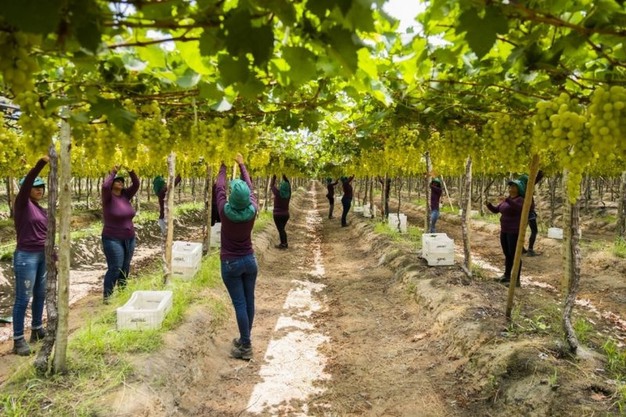 © Agrivale
"In Rotterdam, selling prices fell to 15-17 euros, compared to the 20-22 euros recorded in 2023 and 2024. These campaigns were characterized by climate issues in Europe and North America that favored Brazil. Although historically 15-16 euros are not unusual levels, the growth of the Brazilian domestic market has increased the sector's expectations. Perhaps we are waiting for the European market to pay historic prices for a one-time situation," he stated.
 © Agrivale
The increased volume concentration in Europe put downward pressure on prices. In response, Agrivale adopted a cautious strategy, cutting its shipments by 110 containers from the previous year and redirecting produce to the domestic market. "We didn't want to engage in the volume and price battle that Europe was experiencing," Campos stated.
For 2026, the outlook still depends on how the harvests in Italy, Spain, and Greece develop. "The season relies on the state of the European harvest. However, it's too early to know how it will turn out," he noted. In the absence of a strong U.S. market, plans target volumes comparable to 2025, though the final decision will hinge on conditions in September and October.
 © Agrivale
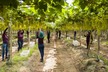
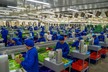
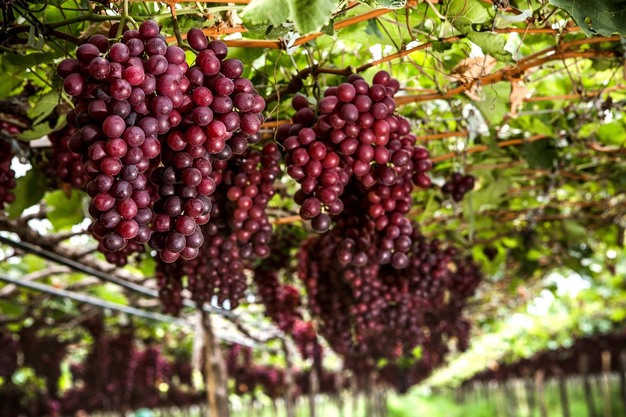
Brazil's varietal scene is evolving, with Cherry Crush reds and Autumn Crisp whites gaining prominence. "In 2025, Autumn Crisp was our top export variety," Campos stated. The sector is also investing in technology across both fields and packing plants, including berry-counting and automation systems to reduce reliance on manpower amid growing challenges.
Regarding new destinations, Brazil has established a protocol with China, though the 40-day transit time makes operations more difficult. The Middle East faces similar logistical issues, and the country has just started negotiations with Mexico.
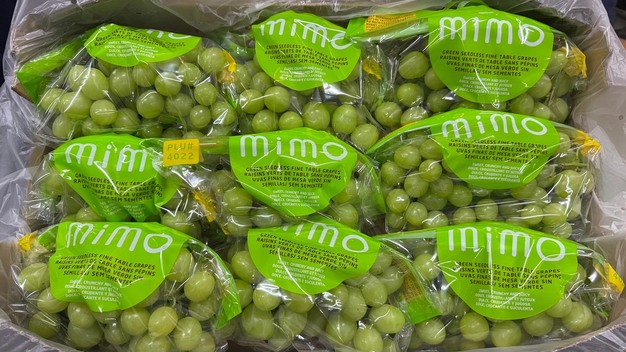 © Agrivale
In the medium term, the Mercosur-EU agreement could change the competitive landscape. Brazil still pays tariffs in Europe, unlike its competitors such as Chile and Peru. If this barrier is removed, the European market could become more prominent. "It is possible that in two or three years, the European market will be the most important market for Brazil," Campos said.
"Brazil produces grapes year-round, with specific windows between April and May for both Europe and, under normal conditions, for North America. We expect a normal harvest this season if there are no weather issues," he concluded.
 For more information:
Aníbal Campos
Agrivale
Petrolina, Brazil
Tel: +55 87 2101-4090 / +55 87 99163 9442
Email: [email protected]
[email protected]
http://www.agrivale.com/