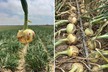
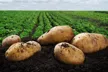
Colombia is home to around 850 native potato varieties, although commercial pressure on types such as R12, betina, and pastusa has led to genetic erosion in several regions. In Nariño, Alfonso Enrique Chinguad, a Pastos Indigenous guardian, maintains more than 130 varieties at his home in vereda Tasmag, Resguardo Indígena del Gran Cumbal.
His collection includes pastusa and criolla types, alongside chauchas and guatas. Chauchas account for 65 per cent of the collection and include small coloured tubers, while guatas represent 35 per cent and are generally larger white-skinned types suited to storage. Tubers are stored in costales and multiplied through community exchanges.
This work forms part of a wider recovery process in the Cumbal Indigenous reserve. Through participatory workshops and five-cell farmer groups, 72 potato varieties, 25 maize types, and 47 bean varieties have been recovered. Collaboration with Agrosavia has catalogued more than 150 potato varieties and 50 Andean tubers.
Production takes place in shagra systems located in páramo agroecosystems between 2,900 and 3,500 meters altitude. Guachado tillage is carried out manually on plots smaller than 0.06 hectares. Approximately 16 per cent of families in the area cultivate at least one native potato variety, often intercropped with maize, beans, and quinoa.
Agrosavia researchers Alba Nora Sanchez Bernal and Fabio Ernesto Martinez Maldonado have documented morphological traits for future reference. Seven morphological clusters have been identified with distinct characteristics. However, some observers note that without access to market channels, varietal diversity may remain under pressure.
Climate frosts and phytosanitary challenges continue to affect production. Seed exchanges and agroecological methods are used to mitigate risks. In Boyacá, the municipality of Tasco has initiated similar trials, testing more than 10 varieties across different altitudes, with a catalogue planned for completion in 2026.
CREPIB in Boyacá promotes organic production methods and reduced use of agrochemicals. Industry sources indicate that uniform commercial varieties dominate demand, while public procurement tends to favour imported products over native lines.
According to national seed bank data, more than 200 potato varieties have disappeared nationwide since 2000. Community-based conservation models aim to counteract this trend through in situ cultivation and documentation.
Workshops also train younger growers in identification and classification. Partnerships with the International Potato Center support local inventories and align documentation with international standards. These initiatives maintain production cycles in high-altitude systems and preserve varietal resources for local consumption.
Source: Colombia 1