About 40 years ago, a group of U.S. growers began importing fruits and vegetables from Latin America to extend availability and meet growing consumer demand. Since then, their company has shown tremendous growth and developed into a true global player, sourcing produce from all over the world. While this may not sound unusual, what makes the business model unique is the cooperative organizational structure. "I am not aware of any player in fresh produce that operates on this global scale and is structured as a cooperative," says Philip Symons with North Bay Produce. "We have 30 growers in our group who are the members and shareholders of the company," he added. Together, they own the company and the production. North Bay Produce, the marketing division, is owned by the growers. Since its foundation, the group of grower members has expanded. In addition to the U.S., grower members from Central and South America have joined and in the next few years, growers in Europe, Asia, and Africa are expected to be added as members. "That will result in a proper global membership of growers," Symons added.
Transparency
There certainly are pros and cons to being a cooperative. "I think one of the real benefits is transparency." Growers can access and share all information regarding costs, the way the company operates as well as profits that are being made. Everybody comes together at the annual meeting where all accounts are being discussed in detail by the board, consisting of the co-op's 30 members. At this meeting, all big decisions and accounts for the year will be signed off on. In addition, the Executive Board - a mixed group of growers and management - is empowered to make smaller decisions throughout the year. In the end, it's the members running the show and making big decisions together. There are no outside interests in the company, trying to pull members in different directions. Ultimately, this foundation provides the members with a lot of stability.
 © North Bay Produce
Long-term view
In addition to transparency, having a long-term view is another benefit of the cooperative structure. "We're not short-term profit oriented, but plan ahead and make decisions based on a long-term view." Any profit that is being made goes back to the member growers in the form of dividend, which gets re-invested into the farms. While this is probably the real advantage of a cooperative against other models, the flipside is that a cooperative can't grow as fast as companies that receive significant amounts of investment capital. "We have managed the way we've been growing and it is very sustainable over a long period of time. I might be wrong, but since I joined the company in 2010, I can't remember a year we went backwards," said Symons. When looking at future projections, the cooperative is very optimistic and bullish about its growth.
Benefits from a retailer's perspective
For retailers, the cooperative structure means that they are working directly with a grower-owned organization. "I used to work for a retailer myself and we always put the grower first. Being the actual producer who is able to secure supply, the grower is the most important element," Symons mentioned. "The grower, not the marketing company, has the ability to control the shelves of the retailer and for that reason, they should be considered the number one in our supply chain." Ultimately, it is the grower who decides where to send their fruit to and in an environment of global competition for fruit, the grower should have the power.
To strengthen the relationship, both growers and retailers get invited to industry events. In addition, retailers have opportunities to visit farms. By hosting retailers on the farms, they better understand where product comes from, providing them with a really unique overview of the total supply chain. It is a very open and transparent relationship, which retailers have come to appreciate.
 © North Bay Produce
High interest in becoming a member
Transparency coupled with the fact that all North Bay's employees are working on behalf of the growers, provides the members with a lot of confidence. This has resulted in North Bay receiving a lot of interest from growers who would like to join the cooperative as a member. "We are receiving more requests than we can handle." However, before a grower can join the cooperative, it is important to find out if the collaboration is compatible. "We would like to know if we align from an ethos and ethics point of view and for that reason, it takes about three to five years before a grower can become a member," shared Symons."
Blueberries are key commodity
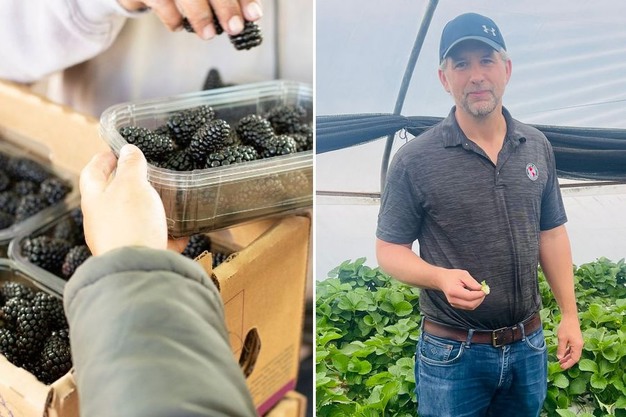
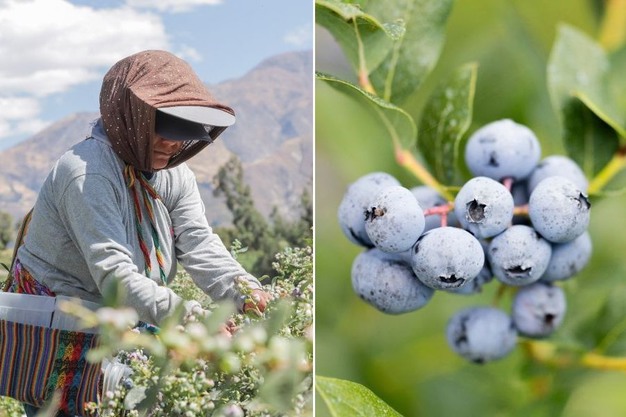
When the company was founded, apples and vegetables were the dominant commodities. While they are still important commodities in the U.S., blueberries have become the cooperative's single largest item globally, followed by raspberries and blackberries. "Blueberries are our real hallmark and the growth in this category has been phenomenal," he commented. This is partly driven by the fact that North Bay is a licensee of Sekoya®, the fastest growing blueberry club globally that has 14 members in total. "We are one of the larger members and have managed to roll out the program fairly quickly." Whilst the Sekoya breeding program has undoubtedly been a huge success North Bay has been working for years with different nurseries and universities to bring better berry varieties to market. "We recognize the huge importance of getting best in industry quality onto the retailer shelf for customers to enjoy". Great customer experience has been the real driver behind the growth in consumption over the last decade. "We see North Bay as a leader in this field and are looking forward to sharing new even better berry varieties in the near future".
Sales growth outside the U.S.
The majority of sales, about 70 percent, are still generated in the U.S. market. While the company continues to grow in the U.S., the fastest growing regions are now Europe, Canada, and Asia. Today, about 20 percent of total sales are generated in Europe, and Asia is responsible for about 10 percent. "Increasingly, we are bringing licensed varieties from the U.S. and Mexico to Europe and Northern Africa." Blackberries and raspberries for instance are more and more brought into Morocco and southern Europe with the goal to expand production and increase access to the European market. "We have some nice new varieties coming that will find their way into the European and Middle Eastern markets."
 For more information:
Philip Symons
North Bay Produce
[email protected]
www.northbayproduce.com