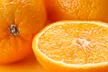
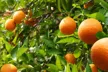
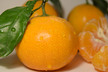
The UCR-developed Tango mandarin, first released to growers in 2006, has played a long-standing role in the development of the U.S. and global citrus industry. After nearly two decades under patent protection in the United States, the U.S. plant patent for Tango has now expired, allowing domestic growers to plant the variety without paying royalties. International plant variety protection remains in place.
According to University of California system data, Tango has generated more than US$70 million in cumulative economic value for UC Riverside. Marketed under various consumer brands, the variety became widely planted due to its seedless characteristics, ease of peeling, and suitability for shipping. For growers, Tango offered production and management advantages, while for consumers, it aligned with demand for convenient citrus.
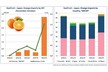
In California, the impact of the variety is reflected in acreage data. According to the California Department of Food and Agriculture, Tango accounted for nearly 20,000 acres, or approximately 8,094 hectares, representing 32 per cent of total mandarin acreage in the state in 2024. The U.S. Department of Agriculture estimated the total production value of mandarins in California at US$855 million for the 2024/25 season, placing Tango's contribution at around US$272 million.
Globally, Tango is grown in more than 20 countries and marketed in over 50 markets. International royalties will continue to apply outside the U.S., supporting ongoing variety management and research.
The variety was developed at UC Riverside by citrus geneticist Professor Mikeal Roose and research associate Timothy Williams, with support from the California Citrus Research Board. The breeding process began in the 1990s with the goal of developing a mandarin that would remain seedless regardless of surrounding citrus varieties. To achieve this, researchers used gamma irradiation on mandarin buds to induce genetic mutations, followed by grafting, greenhouse evaluation, and field trials.
"Some genetic changes happen, some don't," Roose said. "You just have to grow the trees and wait, sometimes for years, to see what you've got."
From approximately 200 trial trees, two selections met the target traits, and one was ultimately commercialised as Tango. The variety's ovules and pollen are highly sterile, preventing seed formation both within the variety itself and in neighbouring citrus blocks. This reduced the need for growers to implement pollination control measures such as netting, isolation, or relocating beehives.
"It's very easy to grow in the nursery," Roose said. "It works well on the main rootstocks we use, grows vigorously in the field, and produces heavy yields."
The variety is a late-season producer, extending mandarin availability by around two months. UC Riverside notes that Tango is part of a broader citrus breeding programme that has introduced more than 40 citrus varieties since 1907. As the US patent expires, the variety enters a new phase of adoption within domestic citrus production while remaining protected internationally.
Source: UC