South African litchi producers continue to adjust orchard management practices to maintain yields under variable climatic conditions, with a strong focus on year-round tree preparation.
At Riverside Farm near Malelane in Mpumalanga, part of Komati Fruit's subtropical fruit operations, summer harvesting requires detailed planning throughout the year to secure flowering and fruit development by November. Henery, part of the farm's management team, said: "What we do leading up to the end of the year makes or breaks our yield."
Riverside has 98 hectares of litchis in production, all planted to the Mauritius cultivar. The variety remains widely used in the Southern Hemisphere due to yield stability and adaptability. Alongside this, trials are underway with Fay Zee Siu and Kaimana cultivars, which offer larger fruit size and alternative flavour profiles. According to Henery, growers continue to test new genetics and practices to improve climate tolerance without affecting yield, appearance, or flavour.
Litchi trees are sensitive to temperature, wind, and humidity shifts, and export volumes can fluctuate due to weather variability. The South African National Litchi Growers' Association reported exports of 2,637 tons in the 2023/24 season, 2,449 tons lower than in 2022/23, reinforcing the need for tighter control of growing conditions.
At Riverside, a trial block of younger trees has been placed under netting to limit wind and sun exposure. Top-down misting is used to manage humidity during temperature spikes. The trial compares tonnage and fruit condition between netted orchards and exposed blocks.
Production cycle management starts soon after harvest ends in mid-January. Between January and April, trees are pruned, shaped, and fertilised. Post-harvest pruning supports uniform flushing, as litchis flower only on new growth. After flush preparation, Ethephon is applied, and irrigation is reduced to prevent early winter flowering.
During winter, irrigation is stopped to induce stress, limiting vegetative growth and promoting starch accumulation for flowering. Cooler winter temperatures support uniform flowering, while warmer conditions can reduce fruit set. Irrigation is gradually restored ahead of budding and flowering, which lasts three to four weeks. Bees are introduced for pollination, with fruit set occurring by late September.
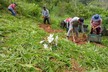
Harvest takes place from November to January using seasonal labour. Due to perishability, fruit is harvested, packed, and cooled within 24 hours. Post-harvest handling includes sulphur dioxide fumigation, acid neutralisation, sorting, and cold storage below 5°C before transport.
Exports accounted for 60 per cent of the 2023/24 harvest, with Europe and the US as key destinations. Henery said US import tariffs have affected trade flows but noted that growers continue to adapt orchard practices and cultivar selection to meet export demand under changing conditions.
Source: Farmer's Weekly