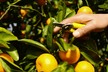
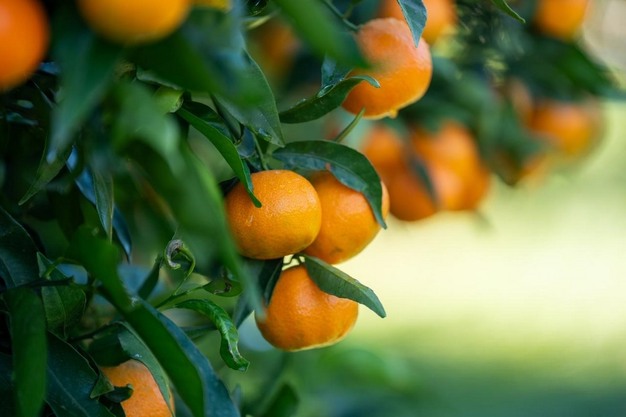
The 2024/25 citrus harvest at Cooperativa Morgia is shaping up to be one of the most unusual in recent years. "The drought and summer heat significantly impacted the size of the fruit, especially the early clementines," explains Managing Director Francesco Graziani. "The fruit was smaller than usual at the beginning of the season. Then, the autumn rains helped, and the fruit grew in size. Now, the common clementines are the right size."
Despite the climatic difficulties, the organoleptic quality is exceptional. "This year, the clementines and other citrus fruits are exceptional," confirms the cooperative's Quality Manager, Giorgio Tricarico. "The taste is truly remarkable, as recognized by all our customers."
 © Cooperativa MORGIA
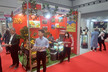
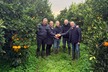
Francesco Graziani and Giorgio Tricarico
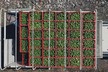
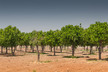
The Cooperativa Morgia is an agricultural company based in Corigliano-Rossano, Calabria, founded in October 2011. It grows, harvests, and sells citrus fruits, stone fruits, and other fruits. The company is committed to environmental sustainability and aims to achieve increasingly high quality standards to guarantee customers freshly picked, fresh, genuine products. The cooperative works year-round to grow citrus fruits such as clementines, mandarin oranges, lemons, and oranges, as well as stone fruits such as peaches and nectarines. The southern Italian cooperative is characterized by its skilled and dedicated team. Currently, it distributes its products through large-scale retailers in Italy and abroad. It has a production capacity of approximately 12,000 tons, 8,000 of which are citrus fruits and 4,000 of which are stone fruits.
 © Cooperativa MORGIA
In addition to Italy, the cooperative operates in several other countries, including Germany, Romania, the Netherlands, Eastern Europe, and the Nordic countries, through established chains and trading partners. Each market has different needs in terms of size, packaging, and specific requirements. Some want packaged products, some prefer bulk products, and some request 500-gram packs. We adapt to all circumstances. It's an integral part of our job," explains Graziani.
"Everyone counts equally"
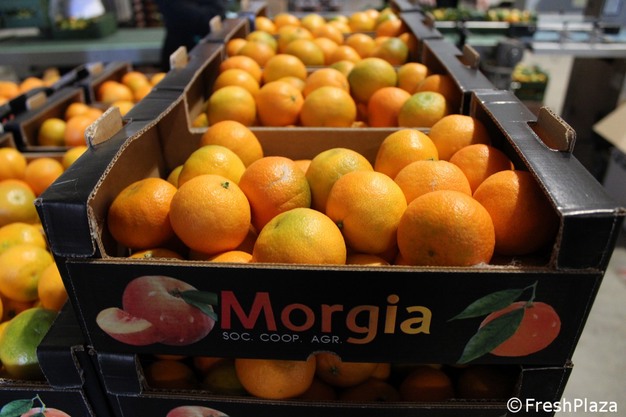
"The Morgia Cooperative includes small, medium, and large companies that all share the same level of control," Graziani emphasizes. "All members count equally. Regardless of how many hectares they manage, every member is equally valuable. They all adhere to the same production standards, and our agronomists constantly monitor the crops. The batches are homogeneous with natural variations in size, but the quality remains consistent."
 © Maria Luigia Brusco | FreshPlaza.com
Prices are too low: "It is not by devaluing the product that we increase consumption"
Graziani delves into one of the campaign's most critical issues on the commercial front: price management. "We are suffering a lot at the moment, not because of external causes, but because of a problem stemming from those of us who work on the ground. Individualism is rampant."
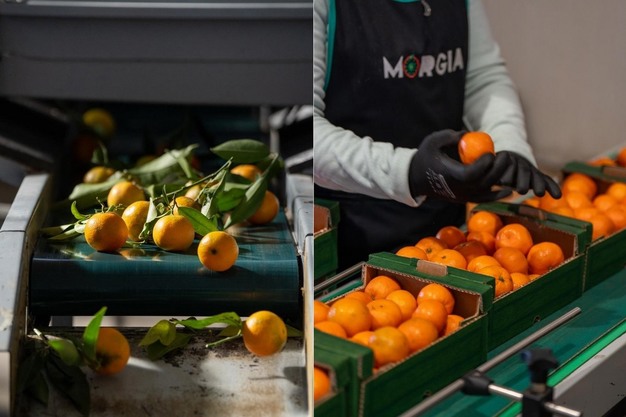
According to the managing director of the cooperative, the pattern is always the same: "We compete to see who can offer the lowest price. But nothing is achieved this way. On the contrary, the product is devalued." Graziani says the idea that lower prices stimulate demand is not supported by reality. "It's been proven that changing prices doesn't increase consumption. If you sell ten platforms, you will continue to sell ten. You won't sell twenty by lowering the price."
 © Cooperativa MORGIA
Graziani insists that the difference of a few cents does not affect the end consumer. A customer's life isn't changed whether they pay 1 euro or 1.10 euros for a kilogram of clementines. However, for us, who process thousands of quintals, those ten cents add up to hundreds of thousands of euros. That's money we need to plan for, invest, and grow."
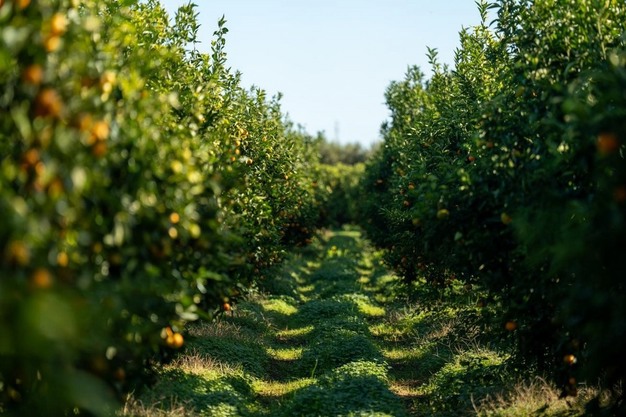
The economic issue is then linked to climatic difficulties, which exacerbate the problem. "We already have to deal with an increasingly complicated season in terms of weather. If we also lose the opportunity to collect those cents that make a difference, the damage will be irreparable."
 © Cooperativa MORGIA
The quality of the fruit is excellent, but large-scale retail trade standards demand aesthetic perfection
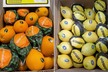
The real critical issue of the season, especially for the early varieties of clementines, was not the internal quality, but rather the peel. "The red spider mite is causing a lot of waste because we can't use certain treatments permitted by Italian regulations, so the fruit has aesthetic defects," Tricarico explains. "The pulp is excellent, but large-scale retailers want perfect products on the outside as well. As a result, excellent produce is discarded, which puts producers and businesses in a difficult position."
"This issue is also evident when comparing with other countries. In Italy, the green peel is no longer considered an issue, but in some European countries, it is still considered unacceptable. In that case, consumers do not accept what is normal for us: clementines with the right Brix degree, adequate acidity levels, and a color that is not completely uniform, but which are ready to eat."
 © Cooperativa MORGIA
The stringent nature of Italian phytosanitary specifications, which are more restrictive than those of other countries, imposes limitations on the use of certain treatments. According to Graziani and Tricarico, this creates a paradox: "The fruit is spectacular, but if it has skin defects due to our inability to use certain treatments, it is discarded. And the rejection rate increases every year."
In Europe, chains are moving in the same direction, tightening regulations to nearly Italian levels. They are demanding increasingly restrictive certifications, controls, standards, and residue limits. Everyone is going down this road. These demands cannot be met overnight; they require long-term planning. "It's not something that can be invented overnight. "Long-term planning, which is at least three years, is necessary to remain competitive and meet the demands of Italy and abroad."
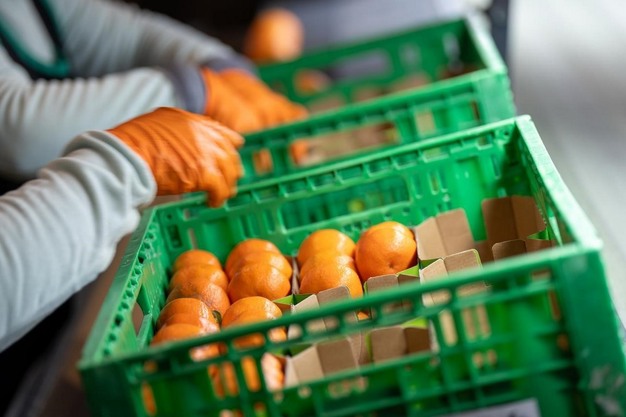
Graziani also highlights a critical point in commercial relations. "Large-scale retailers often only look at price lists, not the reliability of the structure. Yet a year's worth of work goes into it: certifications, analyses, fulfilled orders, punctual trucks, and constant deliveries. All of this often takes second place to price. This makes it necessary for the cooperative to invest in technology, quality, and organization to meet ever-increasing demands."
 © Cooperativa MORGIA
New site: Technology, sustainability, and artificial intelligence
For Cooperativa Morgia, one of the most significant milestones in 2025 is the upcoming opening of the new plant. "We are very close," explain Graziani and Tricarico. The new plant will be equipped with the latest technology from the Sorma Group, including systems for internal and external quality selection, as well as calibration by weight, diameter, and color. The plant will also have artificial intelligence support.
The site will also have: CAM (Minimum Environmental Criteria) certification; total recycling of processing water; 500 kW of photovoltaics for self-consumption, with an additional 500 kW for programmed accumulation during the expansion phase; a line with two electronic sorters, each with six channels; and an operating capacity of at least 250 pallets per day.
 © Cooperativa MORGIA
The air-conditioned facility ensures optimal working conditions and product freshness. This demonstrates the company's dedication to its employees. There will be areas dedicated to the well-being of all employees, including external drivers. These drivers will have access to a refreshment area and showers. Internal staff will have access to new changing rooms and a canteen, confirming that people are at the heart of the company's growth.
"These investments were mandatory," Graziani concludes, "because today, competitiveness depends on technology, reduced consumption, sustainability, and the ability to offer the highest quality. We cannot afford to fall behind."
For more information: Morgia Soc. Coop. Agr.
Corigliano Industrial Zone, snc
87064 Corigliano-Rossano (CS) - Italy
+39 0983 851260
[email protected]
www.morgiacooperativa.it