The Mercosur-European Union trade agreement enters into force on May 1, with a direct impact on Brazilian exports. According to estimates from the National Confederation of Industry, more than 80% of the products Brazil sells to the European bloc will have their import tariffs eliminated in the initial phase.
In practice, the removal of tariffs lowers the cost of entry for Brazilian products into Europe, increasing their competitiveness against countries without similar agreements with the bloc.
The treaty creates a free-trade area linking a market of more than 700 million consumers. According to the confederation, more than 5,000 Brazilian products will receive immediate tariff-free access, including agricultural goods.
In the first quarter of 2026, Brazil exported about 111,456 TEUs of goods to the European Union's 27 member states.
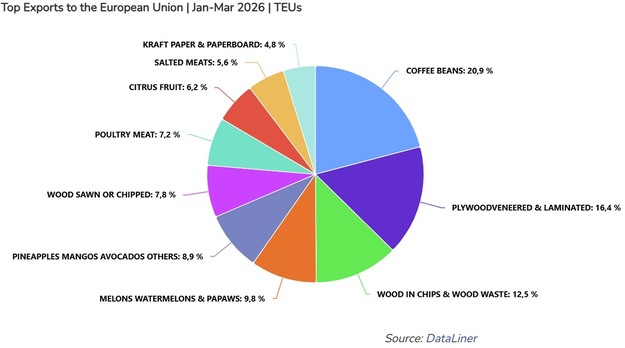 © DataLiner
Direct impact on exports
At present, several Brazilian products face tariffs when entering the European market, increasing their final price. Under the agreement, those barriers will begin to be dismantled. Of the 2,932 products that will have tariffs eliminated at the outset, a portion includes food products and raw materials.
In the food sector, broader market access could create room for a larger presence of Brazilian products in Europe.
Strategic weight of the agreement
The agreement expands Brazil's commercial reach. Countries with which Brazil maintains trade agreements currently account for about 9% of global imports. With the addition of the European Union, that figure could exceed 37%.
The treaty also establishes rules on trade, government procurement, and technical standards, increasing predictability for exporting companies.
Gradual implementation
Some products will see tariff cuts phased in over time, with implementation periods of up to 10 years in the European Union and up to 15 years in Mercosur. In some cases, the transition may extend to 30 years. This transition is intended to protect sectors considered sensitive in both blocs.
Next steps
The entry into force marks the beginning of the implementation of the agreement. The Brazilian government is expected to regulate issues such as the allocation of export quotas within Mercosur.
A committee bringing together business groups from both blocs is also expected to be created to monitor the implementation of the treaty and guide companies on how to use the new trade conditions.
Source: Vitória News / DatamarNews