 © RFCFor South African fresh produce growers and packhouses, food safety compliance is no longer simply a regulatory obligation—it is increasingly a prerequisite for market access.
According to Retha Faul of RFC Food Safety Consulting, local retailers are raising their requirements, with many insisting on recognised food safety certifications before onboarding or continuing supply agreements. "Compliance is no longer optional," Retha explains. "It has become a gateway into formal retail supply chains."
RFC Food Safety Consulting supports producers and processors with the implementation of full food safety management systems, providing what the company describes as turnkey solutions.
RFC works with clients to implement structured food safety culture assessments, often used ahead of audits or as part of continuous improvement programmes.
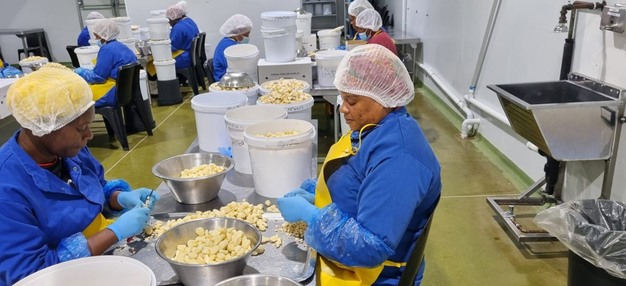
Routine monitoring remains a critical component of compliance. Facilities conduct regular environmental testing, including surface swabs and drain sampling, to detect pathogens such as listeriosis. Finished products are also tested for shelf life validation, pesticide residues, and heavy metals.
 © RFC
© RFC
Environmental monitoring includes doing total plate counts at air ventilation points in ready-to-eat facilities to test for yeasts and moulds, "as well as more operational interventions like pest control programmes, allergen management, and label compliance," says Lindie van Deventer, administrator and training coordinator at RFC.
"In addition, governance measures such as anonymous whistleblower systems are being introduced at the facility level. These systems are proving effective in identifying risks that may otherwise go unnoticed."
At one packhouse, for example, she says, a whistleblower report revealed unethical labour practices, allowing management to intervene and address the issue before it escalated.
 © RFC
© RFC
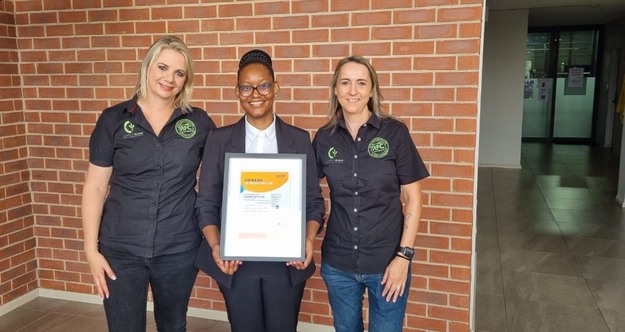
Retha Faul (RFC), Lineo Tlatli (SuperBev), Annie Hemphill (RFC)
"It's about unlocking new market opportunities."
A key development is the move towards digital compliance management. RFC's platform, Comply Cloud, centralises all food safety documentation, certifications, and audit records in one system, Faul explains, and it allows producers, packhouses, and processors to provide auditors and retailers with immediate access to verified information.
"The shift towards digital systems is helping reduce administrative burden while improving transparency and traceability across the supply chain," she says, noting that retailers are increasingly requiring not only food safety certification, but also social and ethical compliance.
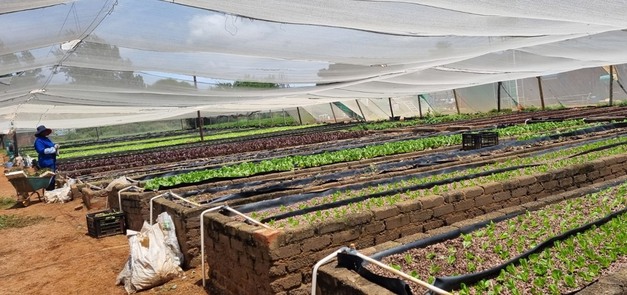
"Standards such as SIZA and GLOBALG.A.P GRASP are becoming more common requirements, particularly for suppliers entering formal retail channels. This is where many producers are seeing the real value of compliance," she notes. "It's not just about meeting legal requirements - it's about unlocking new market opportunities."
 © RFC
© RFC
Stricter enforcement is driving industry change
RFC provides training to hundreds of employees annually across the agricultural and food processing sectors. "The Department of Labour enforces farms to adhere to the OHS Act (Health & Safety Act) for which RFC offers health and safety training, such as first aid, basic firefighting, SHE Rep, legal liability, stacking & storage forklift and tractor driver training, to name a few. We also offer Health & Safety files for all industries."
The recent introduction of the RFC Academy has expanded access through e-learning, they say, allowing employees to complete training at their own pace while ensuring consistent standards.
 © RFC
© RFC
Beyond certification, there is a growing focus on food safety culture within organisations. Recent fatal food safety incidents in South Africa have led to increased regulatory scrutiny and enforcement.
One outcome has been the stricter application of requirements around pest control operators (PCOs), with farms, packhouses, and food processing facilities now required to have a registered PCO in place. Agrochemical suppliers are no longer permitted to supply products to businesses that do not meet this requirement.
At the same time, inspections by the Department of Employment and Labour have intensified.
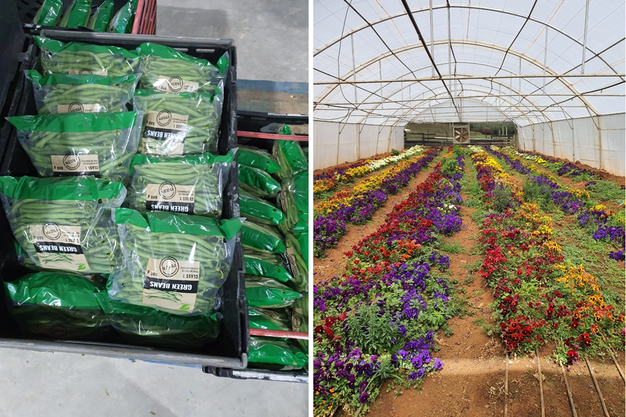
Faul says it has been accompanied by improved compliance across areas such as the provision and use of personal protective equipment (PPE), which had historically been inconsistently applied.
 © RFC
© RFC
Compliance as a competitive advantage
As the South African fresh produce sector continues to align with global standards, compliance is increasingly seen as a strategic investment rather than a cost, Faul observes.
"For producers aiming to supply formal retail markets, both locally and internationally, robust food safety systems, documented compliance, and trained personnel are becoming essential components of doing business. Ultimately," she concludes, "compliance is about more than meeting requirements - it's about building trust across the supply chain."
 © RFC
© RFC
 For more information:
Retha Faul
Retha Faul Food Safety Consultants
Email: [email protected]
https://rfcsa.co.za/