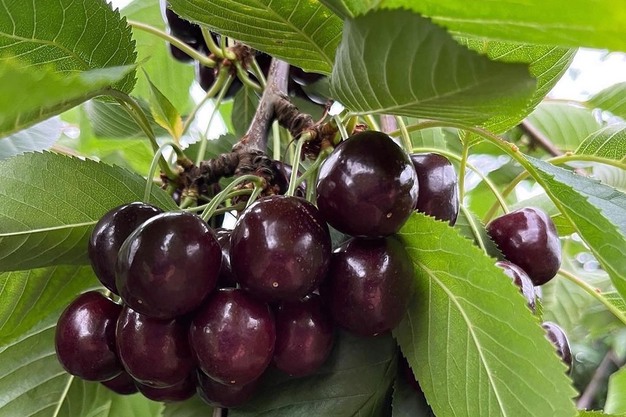
The northern hemisphere cherry season in 2025 was a complex one, especially with European production, according to Jon Clark from Fruit World International. "Where Eastern Europe suffered huge crop losses as a result of frosts, the rest of Europe faced the challenge of a late start and a condensed season alongside high yields, the cumulative effect of this meant the fruit ready to pick on the trees was often 50% more in a week than they had planned."
This resulted in under supplied markets and high prices in Eastern Europe where other parts of Europe were under pressure as the sales momentum that normally builds in May, ready for volume as we head to late June and July, did not have the opportunity to develop and the first sight of cherries was mainly in volume from many origins putting price pressures on markets that struggled to recover.
 © Fruit World International Ltd
2026 Potential: The Americas
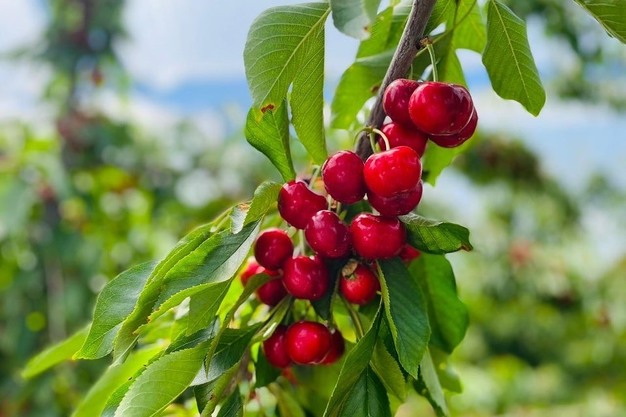
A hot an early spring weather pattern in California USA created a blossom around 14 days earlier than "normal". Great temperatures through March led to an early start to the harvest around after mid-April, continuing the 14 days early. Further north in the Washington State area the season timing is more normal, giving a start as the month of June progresses and large volume from late June.
"This is great news for cherry growers in the USA after the overlapping of crops from the different regions last year and high yields, alongside tariff wars impacting on some export markets lead to price pressure and poor profitability. After a non existent crop in 2024 Canada bounced back with a huge crop in 2025, this coming season volumes are expected to fall a little as the trees balance but at this time (3rd week of April) nature, with the potential of late frosts, will have the final say on the crop.
 © Fruit World International Ltd
Eastern Europe / Eastern Mediterranean
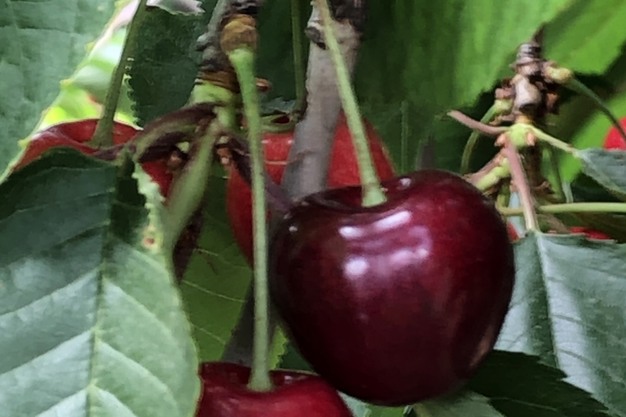
After losing around 80% of its crop last year Türkiye had a favourable winter and so far the spring has been ok meaning they should come back with volume and large export, Germany and Scandinavia remain a key markets in Europe for Turkish cherries with other fruit moving to Russia and in recent years China.
"Other cherry producing countries that lost around 40%+ of their crop in 2025 also look to have a more promising season with expectations of good fruit in Greece, Bulgaria, Romania, Poland, Hungary. Domestic consumption is expected to increase and traditional export markets will absorb more fruit, although there is still some concern on the market potential in the Middle East with the current conflict and movement of people."
 © Fruit World International Ltd
China
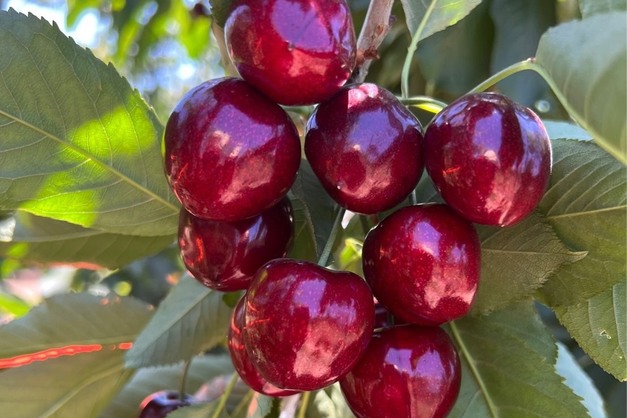
In the last few years China have been developing their own domestic production with modern varieties and rootstocks grown in different regions, producing in glasshouses as well as open fields. "This not only increases volumes but also season length with the Dalian region having new season cherries from March and the later region of Shandong peaking in June. As new varieties are planted this is expected to see the season extend into July and possibly August at a time when USA/Canadian imports are typically high. As new plantings come to maturity the volume grown in China is expected to exceed 1m tonnes, with a further 500,000 tonnes imported from other countries across the year."
 © Fruit World International Ltd
Western / northern Europe
Spain is the leading producer in this region with around 130,000t of production and they are predicting a good crop across the 3 main growing areas. Harvest in volume will be almost three weeks earlier than 2025, allowing it's supermarket customers to build sales momentum in May, and the early season has seen this starting in late April, an opportunity which they did not have in 2025. Alongside the stemmed cherries, Spain are the only country to produce the Picota cherry in the Valle de Jerte Region, a unique stemless cherry that has been grown in this region for many years and have a Protected Designation of Origin (PDO). It accounts for around 15% of the overall Spanish production.
"Italy is expecting a recovery from the low volumes in 2025 with an anticipated country volume of 100,000t with the majority of this fruit sold domestically and exported to Germany. Germany is also seeing a recovery of domestic volumes with a crop that should be 50,000+, the vast majority of this fruit is sold internally and that extra volume will displace some imports from Spain and Türkiye in June and July, as the month of August progresses the need for imports in the German market increases again.
"Belgium & Netherlands are each producing around 10,000t and production this year is expected to be similar to 2025 season and volumes peaking in the month of July, alongside domestic sales there are exports to countries seeking the Kordia and Regina varieties for their great taste."
The UK production has steadily increased over the last few years with overall production approaching 9,000t, the vast majority of which is sold to domestic supermarkets but in recent years there has been a move to develop alternative routes for the fruit.
"At this stage the Northern Hemisphere cherry season looks to be a well balanced one, with nature being kind to deliver a fair crop for most growers alongside each region/origin fitting in to a supply window without major overlaps. This helps build the sales momentum and deliver fresh great eating fruit to consumers on a regular basis at values that work for growers and consumers. Having said that, there is a long way to go and the sunshine is the number one decider in both giving the fruit as well as an environment that encourages consumption."
For more information:
Jon Clark
Fruit World International
Tel: +44 (0) 7525 668880
[email protected]
www.fruitworld.co.uk