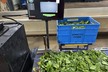
The fresh produce sector is becoming increasingly open to digital innovation. Companies were hesitant for a long time, but Rick Schot of Experience Data sees a clear shift. "With today's AI tools, we can build solutions much faster. That makes it more accessible to the sector," he says. Experience Data, a Dutch company, develops customized solutions for businesses with specific data needs. Through its subsidiary Experience Fruit Quality, it focuses specifically on fruit and vegetables, offering software for things like ripening and quality control.
From remote to practical uses
The fresh produce sector is traditionally made up of small, hand-on companies, making digitization less obvious. "That didn't always align with the approach of large corporations." That, however, is changing rapidly. Modern AI tools mean faster, more cost-effective solution development. Yet, specialized knowledge remains essential. "You still need data scientists and developers to ensure models are accurate and safe to use," says Rick.
 © Experience Data
Practical supply chain applications
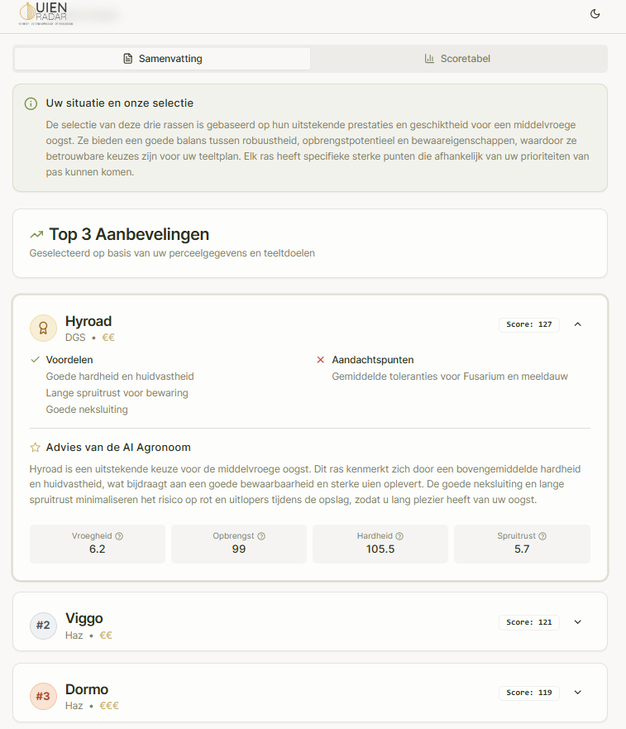
According to Rick, AI's power lies in concrete applications. For example, Experience Data developed a tool for an onion trader that helps growers choose the right variety. "With five to six questions, the grower immediately gets a list of the top three suitable varieties." The tool considers factors such as soil type, climate, and the grower's preferences. "If a variety is too expensive or undesirable, an alternative is suggested," he says. That provides both better advice and valuable customer data for the trader.
 © Experience Data
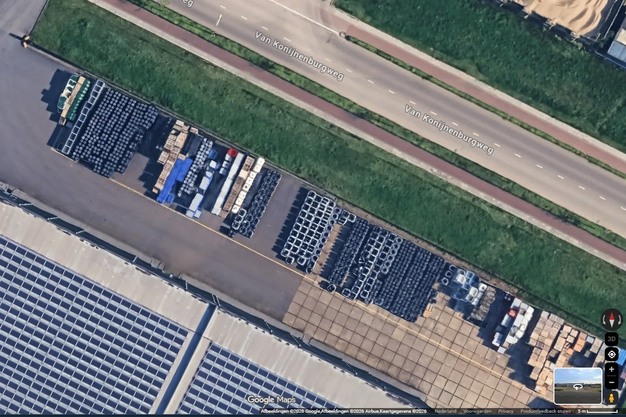
Another project focuses on market expansion. An onion grower wanted to find new clients. Experience Data analyzed satellite imagery and identified patterns in storage locations. "We trained a model on existing buyers and had it search for similar structures." New potential customers were, thus, identified.
Increased accessibility
Rick says AI is becoming increasingly accessible. Projects start at around €10,000, and clients then decide whether they want to proceed with further development. "That significantly lowers the entry threshold, especially for smaller companies," he explains. Smaller players can, therefore, benefit from technology previously available only to large companies.
Hands-on sector as an advantage
Schot considers the fruit and vegetable sector's mindset a strength. "It's a no-nonsense sector. Clients say, 'I want this; just make it happen.' That leads to quick decision-making and concrete results." For smaller businesses, AI offers an opportunity to remain competitive. "If you're small, you must be smart," he points out. "These kinds of solutions let you make a true difference."
 © Experience Data
Looking ahead
Rick expects data's role to continue to grow in the fresh produce sector. From cultivation advice to logistics and market development: AI can make processes more efficient and predictable. "The sector is genuinely beginning to discover what's possible. And this is just the beginning," he concludes. (PB/PDC)
For more information:
Experience Data
Europalaan 400
2 Noord – Pand DotSlash
3526 KS Utrecht
Tel: +31 6 46733036
[email protected]
www.experiencedata.nl