A farmer in India is working on a mango variety that can produce fruit multiple times per year, aiming to extend availability beyond the traditional season.
Shree Kishan Suman, based near Kota, initially cultivated wheat and rice but shifted to alternative crops due to unstable returns. He later moved into floriculture, developing a rose plant that produced flowers in seven colours. This led to further experimentation with mango grafting.
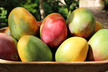
During this process, Suman identified a mango tree that flowered across multiple seasons. Over more than a decade, he refined this trait and developed a new variety called 'Sadabahar', which can bear fruit up to three times per year.
According to The Better India, the Sadabahar mango is being introduced to orchards beyond Kota, including private farms and Rashtrapati Bhavan. The variety has characteristics similar to Alphonso mangoes, with low fibre content and a distinct flavour profile. Researchers are continuing to assess performance across different climatic conditions.
Anand Mahindra, chairman of the Mahindra Group, highlighted the development and stated, "If this variety proves scalable, it opens up real possibilities: for farmers' incomes, for supply chains, even for how we experience something as seasonal (and sacred!) as the mango."
Mahindra also commented on the broader implications of the approach, stating, "It's a general principle that as economies grow, agriculture must shrink in importance. But perhaps what declines is not agriculture itself… only our imagination of it." He added, "What strikes me is not just the outcome, but the method. This is true entrepreneurship: resilience in the face of uncertainty, a science-based approach, and the patience to let nature reveal its secrets."
He further noted that innovation is not limited to technology sectors. "And if he ever chooses to scale his venture, I'd be more than willing to back him," Mahindra said.
The development raises questions around production cycles and supply planning. Extending harvest periods could affect availability patterns and supply chain management for mango production.
Source: The Economic Times