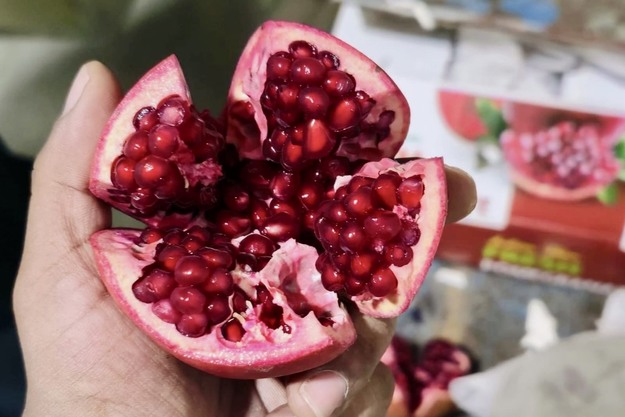
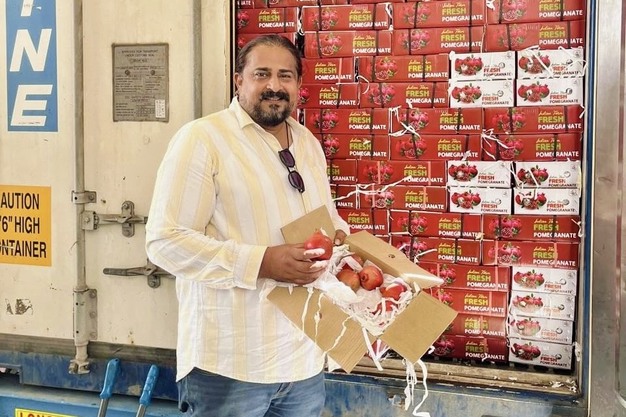
India's 2025-26 pomegranate exports started stellar, shipping over 60,000 MT in the first nine months, easily outpacing FY 2023–24's 72,011 tonnes worth USD 69 million, says Aditya Ghatge of Paathway Global. "We had genuine momentum, thanks to better access to demanding markets like the U.S. and Australia, along with newfound confidence in long-haul sea shipments. Exporters were finally geared up, with top-quality Bhagwa fruit ready to ship."
But the last few weeks have flipped the export script to extreme caution, Aditya observes. "Demand hasn't budged as buyers still want the fruit, but shipping has turned into a logistical minefield. Erratic vessel schedules, port congestion, and skyrocketing insurance mean cargo sits idle for now. Even though pomegranates are tougher than soft fruits like berries or grapes, they're still premium perishables. Once transit time isn't guaranteed, exporters naturally pull back. In the Gulf, where 70% of food imports pass through key straits, volumes are well below normal."
 © Paathway Global
According to Aditya, APEDA has stepped up to pitch in smartly. "Beyond AnarNet traceability that helped exporters crack new markets, APEDA now coordinates with port authorities and customs. At JNPA, perishables are getting priority, along with reefer plug-in fee waivers. It's more about operational greasing of the wheels rather than a direct cash bailout for pomegranate farmers, but it helps keep the supply chain from freezing entirely," he explains.
While diversification into Europe and Southeast Asia was already underway, Aditya highlights how exporters aren't scrambling blindly, but instead playing a short-term, three-way balancing act: "Hold if you can; reroute via hubs like Khor Fakkan or Fujairah, although less efficient than Jebel Ali; or divert to India."
 © Paathway Global
Domestic markets are absorbing the volume, but they won't pay export-grade prices forever," Aditya warns, adding that pre-war farmgate prices sat at USD 1.7 per kg in Gujarat and Rajasthan, and USD 2.2 per kg for Maharashtra's best fruit. But current 50 to 70% air freight spikes, war-risk surcharges, and extra pre-cooling are entirely eating into our margins."
As Aditya sums it, "If shipping routes stabilize, India's Bhagwa pomegranate will rebound fast on its reputation. If the war drags on, the farmgate mood will sour even with surge pricing in Dubai or London. This isn't structural failure; it's a logistics shock. But our pomegranate sector is resilient and tested on protocols. We're just waiting for the world to let our pomegranate exports regain the lost momentum."
For more information:
Aditya Ghatge
Paathway Global
Tel: +91 70 83 125 015
Email: [email protected]
www.paathwayglobal.com