The Namibian government has raised concerns over increasing fruit fly pressure on the country's horticultural sector, particularly the export-oriented table grape industry along the Orange River.
The warning was issued by James Nzhengwa, deputy director in the directorate of agricultural production at the Ministry of Agriculture, Fisheries, Water and Land Reform, during a fruit fly management workshop held in Aussenkehr. He noted that invasive fruit fly species are posing growing risks to both production and trade.
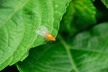
"Fruit flies, particularly invasive and highly destructive species such as the oriental fruit fly (Bactrocera dorsalis), continue to pose serious challenges to agricultural productivity and trade across the Southern African Development Community (SADC) region," he said.
According to Nzhengwa, the pest represents a direct risk to Namibia's table grape industry, one of the country's main horticultural export sectors. "The impact of this pest extends beyond the field, affecting compliance costs and presenting a significant phytosanitary barrier that limits access to lucrative markets.
"For Namibia, effective management of these risks is not only a plant health priority, but also a strategic trade and economic imperative," he said.
The workshop focused on strengthening surveillance systems, pest identification, and control measures to ensure compliance with phytosanitary requirements in export markets. Fruit flies, particularly invasive species, are among the most destructive pests affecting horticultural crops across southern Africa, leading to crop losses, higher production costs, and stricter import requirements.
The training was organised under the European Union-funded Stosar II program in partnership with the Food and Agriculture Organisation and SADC. Participants reviewed surveillance protocols and discussed measures such as the establishment of pest-free areas and areas of low pest prevalence to align with international standards.
Ferdinard Mwapopi, assistant FAO representative in Namibia, speaking on behalf of interim FAO representative Patrice Talla, said coordinated pest management remains necessary to maintain production and market access. "Early detection, coordinated surveillance and integrated pest management are essential not only to protect crops, but also to improve yields, ensure compliance with phytosanitary requirements and expand access to regional and international markets," he said.
Alexandre Baron, head of cooperation at the European Union Delegation to Namibia, said phytosanitary systems are directly linked to trade performance. "Fruit flies pose serious risks to horticultural production and to Namibia's export ambitions.
They increase production costs, cause yield losses, and trigger stringent phytosanitary requirements from trading partners.
"Effective management of these pests is therefore not only a technical necessity, but it is an economic imperative," he said.
Organisers indicated that the initiative will support the development of a national fruit fly action plan aimed at improving coordination between government institutions, researchers, farmers, and exporters. Officials stated that improved fruit fly management is needed to maintain export access for Namibian horticultural products.
Source: The Namibian