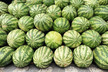
Watermelon remains a widely marketed summer fruit in Saudi Arabia's Jazan Region and is commonly available in local markets. The crop is also widely consumed during Ramadan and is frequently included in iftar and suhoor meals.
In the Jazan Region, watermelon is cultivated on about 14,000 hectares, with annual production exceeding 15,000 tons. Cultivation typically begins after rainfall or after irrigating and flooding the land twice before sowing. The crop is grown in light sandy soils with organic matter.
The growing cycle takes about 90 days. Vines can reach up to three meters in length, and each plant produces between five and seven fruits.
Different watermelon varieties produced in the region are also used as raw material for processing. These include products such as natural juices and other food products. Processing provides additional marketing options for growers and supports the development of local food processing activities.
Consumption increases during Ramadan, when the fruit is widely used to support hydration during fasting periods, particularly in warm conditions. The fruit contains water and vitamins and is commonly included in daily meals during the fasting month.
The Ministry of Environment, Water, and Agriculture continues to implement programs supporting growers and production development in the region. These initiatives also include marketing activities aimed at expanding sales channels.
The measures are aligned with the objectives of Saudi Vision 2030, which includes diversification of agricultural production and increasing the contribution of the non-oil sector to national economic activity.
Source: Saudi Press Agency