The Peruvian onion season 2025-2026 is coming to an end with a good overall yield but disappointing prices. According to Miguel Ángel Salas González, general manager of Agromel SAC and a producer in southern Peru, "the yields have been good, it is a normal year in terms of production, but unfortunately, the United States also had a good production and cornered us."
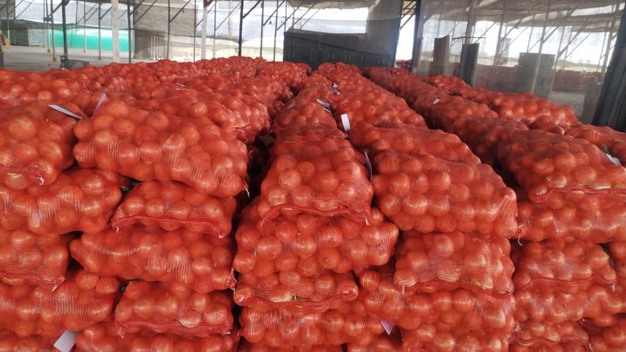
The season is expected to conclude between late February and early March, but shipments have been delayed by one to two months. "Normally, shipments are dispatched between July and September. However, this year, delays caused the onions to accumulate, and the prices have been relatively low, average to low," he said.
 © Agromel
According to Salas, prices have dropped approximately 20-25% compared to last season. "It's been a rather bad season for exporters," he added.
Peru primarily exports its onions to the United States and Spain. "All of Peru sells to the United States and Spain," he notes. This year, the country is expected to export around 8,000 to 8,500 containers, with about 65% going to the U.S. and 35% to Spain.
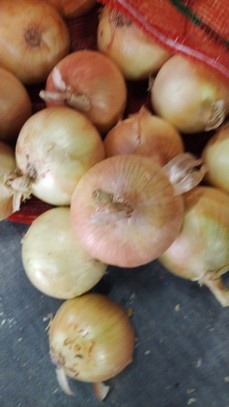
Agromel manages between 70 and 100 containers per season, depending on the year. Its main product is sweet yellow onion for export, while red onion is primarily sold locally and to nearby countries such as Bolivia, Ecuador, and, occasionally, Colombia.
 © AgromelThe largest production area is in Ica, which accounts for about 80% of the national total. Arequipa accounts for between 10% and 20%, while the northern part of the country contributes around 10%.
It's been a typical season in terms of quality and sizes. "The sizes have been standard, the qualities have also been as usual," Salas stated. Nonetheless, he notes that "the excessive cold in spring may have caused a few thick necks and stem problems," although it has not structurally affected supply.
A major ongoing challenge is the cost and availability of labor. "The labor issue is particularly complex for us in Peru; costs are rising steadily, and we need to figure out how to handle this in the coming years," he warned, especially as agro-exports like blueberries compete for the same workforce.
The outlook for next season suggests a potential decrease in planted area. "There will be less production because yields have not been good; some companies have even experienced losses," he stated. However, Salas thinks there could be a possible recovery: "There is always a rebound when these phenomena occur."
For more information:
Miguel Ángel Salas Gonzales
Agromel SAC
Peru
Tel: +51 959 603 288
Email: [email protected]