According to Rafael Prieto Rodríguez, representative of Mayacert, a globally present certification company founded in Guatemala, the growing demands of international markets have made certifications an almost indispensable requirement to work with supermarket chains in Europe, the United States, and Asia.
Mayacert mainly offers certification services in organic production under various international standards, including those of the European Union and the United States (USDA), as well as private schemes, such as GlobalG.A.P. or Rainforest Alliance, and verifications, such as EUDR. "We mainly offer certification services for organic production," says Prieto.
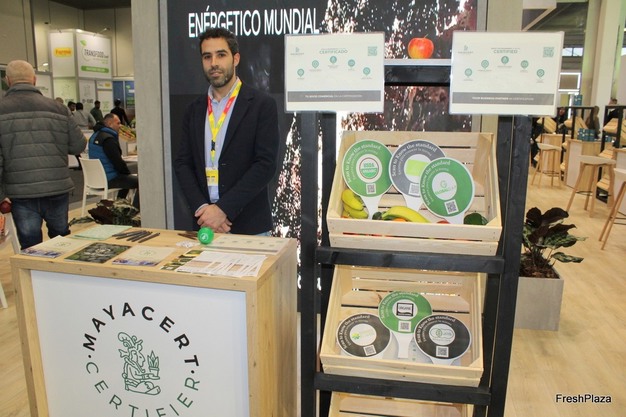 © Diana Sajami | FreshPlaza.com
Although many certifications are technically voluntary, in practice, they have become mandatory if you want to be able to sell in certain destinations. "They are voluntary certifications that the client requests because their own clients demand them as an indispensable requirement," he says.
The process usually starts when the producer, previously informed by their buyer (normally a supermarket chain), contacts the certifier. After a documentary review and field audit, a final decision is made regarding the issuing of the certificate.
Prieto says that, despite the differences between European, American, and Asian standards, "the basic requirements are very similar." Variations usually affect some specific aspects, such as the list of authorized phytosanitary products or certain administrative requirements.
In the case of organic certifications, the focus is clearly on the consumer. "At the end of the day, consumers are becoming more and more health-conscious and tend to eat healthier products," says Prieto.
Key requirements include the limitation or ban of chemically-synthesized phytosanitary products, the use of natural and biodegradable inputs, and a strict traceability system. "Additional control of the records and activities carried out in the field is a prerequisite," he says. This makes it possible to offer detailed traceability of the applications and actions carried out during cultivation.
One of the most debated points in the sector is the accumulation of certifications. Growers say that they have to comply with more and more standards, without this necessarily being reflected in better prices.
Prieto acknowledges the complexity of this scenario. "If producers had to be 100% compliant with the requirements of all current regulations, the process would be much costlier and more complex." The reason for the coexistence of multiple schemes is that each standard has an owner, whether public or private, with independent capacity to define and modify its criteria.
In this context, specialization can be an advantage. "Although it can be perceived as costlier, specialization often reduces the costs," he says.
Mayacert currently has 14 offices in the Americas, Europe, Africa, and Asia, and offers 21 recognized certification services. This shows the global reach of a market where regulatory requirements continue to set the tone for international agricultural trade.
For more information:
Rafael Prieto Rodríguez
Mayacert
Guatemala
Tel.:+34 602 693 555
[email protected]
www.mayacert.com