Tight labour availability and rising wages make farming tougher than ever, not just worldwide but in India too, says Shailendra Tiwari of Bangalore-based agri-tech firm Fasal. "We see farmers struggle with operational complexity where manual execution fails on precision tasks. But automating precision-sensitive operations like irrigation and fertigation can make horticulture industries significantly more competent."
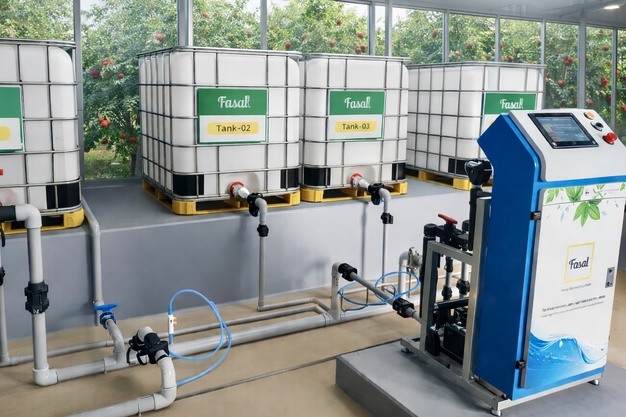
Tiwari shares details of their newly launched farming automation products FasalJet and FasalJet Pro: "As Fasal's crop intelligence systems scaled across thousands of farms in India, we saw tight or unskilled labour and rising wages creating real problems in operations, as precise watering and nutrient delivery were getting missed or done wrong. The new products automate these precision-sensitive tasks while staying simple to use in real field conditions. They're fully developed, commercially validated, and now rolling out across Maharashtra, Karnataka, Andhra Pradesh, Haryana, Himachal Pradesh, and more."
 © Fasal
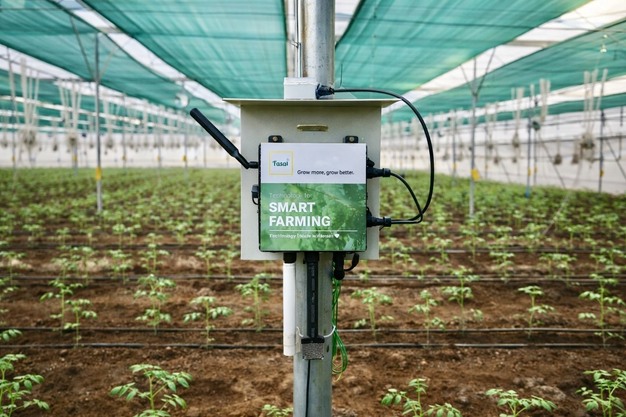
The new farming hardware builds on FasalOne, their farm IoT platform launched in April 2025, which uses modular central and satellite units so farms start small and expand without replacing existing gear. "We first built and tested the platform in India's roughest farm conditions to make it work for any crop, any geography, and any size holding, lowering entry barriers for very small farms while continuing to support larger and more complex operations. The hardware senses soil moisture, weather, crop needs, then feeds AI-driven recommendations directly to farmers' phones."
But FasalJet takes it further with execution. "It extends our existing crop intelligence from sensing to actual on-farm action, automating irrigation based on real-time intelligence, so farmers don't miss critical windows. FasalJet Pro adds fertigation for precise nutrient dosing. Together they create a closed loop, sensing what the crop needs at specific stages, deciding the right action, then executing automatically," Tiwari explains. "We combined patented IoT hardware, agronomic science, and AI models to integrate irrigation, fertigation, pest and disease management for over 30 crops, including chilli, tomato, pepper, cucumber, banana, grape, sugarcane, durian, and pomegranate, among others."
 © Fasal
Beyond individual farmers, Tiwari highlights institutional adoption at the regional and state levels. "ADT Baramati's Sugarcane Productivity Improvement Programme deployed our IoT across 5,000 farms in the first phase. Atal Bhujal Yojana, the national groundwater sustainability programme, uses our tech for data-driven irrigation decisions that promote responsible groundwater use at the farm level. The objective is to improve productivity, resource efficiency, and residue traceability consistently at scale across regions, not fragmented interventions."
"State horticulture departments across Maharashtra, Karnataka, and beyond are signing on fast. Karnataka's Grape & Pomegranate Productivity Improvement Programme, backed by the Department of Horticulture, collaborates with Fasal for farm-level intelligence to boost yield quality and market readiness. So far, we work with over 12,000 farmers and 100 enterprises across India and Southeast Asia, saving 83 billion litres of water, 210,000 kg of pesticides, and 56,000 MT GHG emissions, along with generating income gains for farmers," Tiwari adds.
 © Fasal
Looking ahead, he expects demand for Fasal's new hardware to surge as labour stress worsens. "Southeast Asia, including the Philippines, Indonesia, Malaysia, and Thailand are already deploying such solutions for sugarcane, durian, banana, and vegetables. Asia, Africa, and the Middle East face the same structural issues. We aim to support 100,000 farmers in the next five years with our closed-loop automation for yield, quality, and consistency," Tiwari concludes.
For more information:
Shailendra Tiwari
Fasal
Tel: +91 82 62 908 981
Email: [email protected]
www.fasal.co