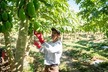
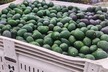
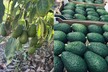
The supply of papaya is moderate right now which is keeping pricing stronger. "There's not a whole lot and there's not very little," says Lance Peterson of Super Starr International. "I think there's not a lot of good quality fruit."
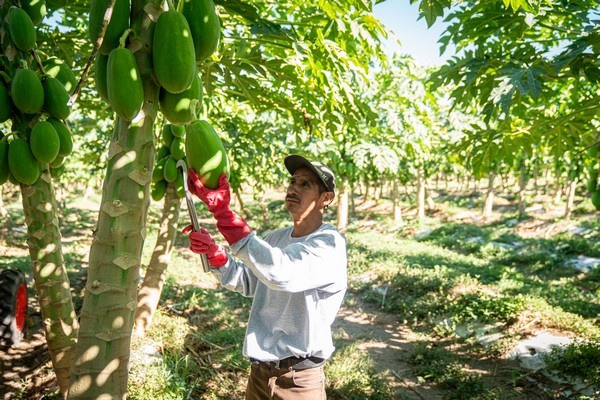 © Super Starr International
That quality issue is attributed largely to an annual short-term shift in growing conditions in Mexico, where more than 80 percent of the current papaya supply in the U.S. is coming from right now. "It's when you start to have cooler nights and it throws the plants off for a little bit and it takes them a week or two to adjust. In the interim, the fruit shows this and then it returns to normal."
Not only can the change in temperature affect the quality but it can also slow down the growing. "This is a fairly recent issue but before this, there was quite a bit of rain too," says Peterson. "So we had a month and a half of having fruit with rain issues and then when things were correcting themselves with the rain, the cooler weather came in."
Slow demand period for papaya
As for demand, while product has been moving, it's been uneven, which could also be attributed partly to the concerns over quality. "Also going into the holidays, not many people are thinking about papaya–they're thinking about holiday foods and Christmas parties," says Peterson, noting that that's expected to change come the new year when consumers become more health-conscious again. "We really start seeing that demand at about the second week of January."
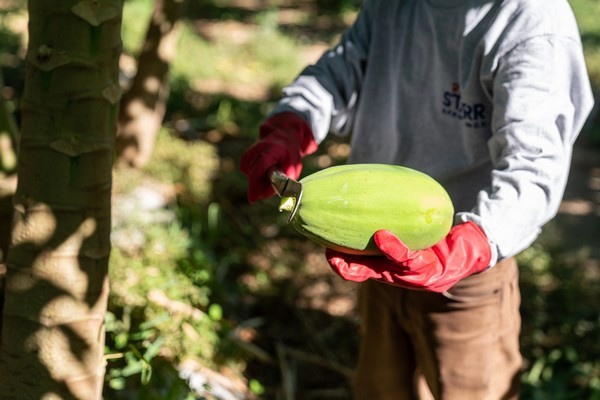 © Super Starr International
On pricing, it's between $22-$25 on open markets, depending on size. This is above average for this time of the year.
 For more information:
Lance Peterson
Super Starr International
Tel: +1 (956) 510-8126
[email protected]
www.superstarrinternational.com