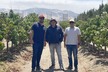
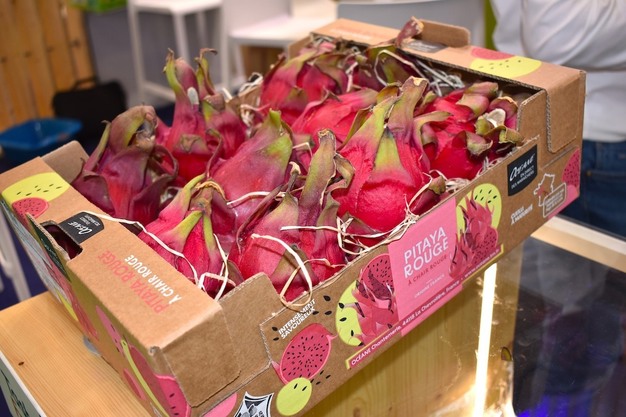
In Saint-Vincent-sur-Jard (Vendée department), Abderrahim Oufaquir, manager of SCEA Les Petites Métairies, has embarked on a strategic change of direction for his farm. As a greenhouse tomato grower for many years, he was looking for a crop capable of ensuring a solid base and future profitability for his farm. "I wanted to find an original product with a promising future and real economic potential, so that I could pass on to my daughter a viable business that she would enjoy working in," explains Abderrahim Oufaquir. It was with this in mind that he decided to introduce the production of greenhouse pitayas: a world first.
 © Aurélie Pintat | FreshPlaza.com
A project matured over two years of observation
While some might describe this project as a gamble, it is in fact the result of a great deal of thought and reflection. "I discovered the pitaya in Spain and Morocco, where I got the idea of adapting its cultivation to our production methods and climate in France. It reminded me of the first strawberries grown in greenhouses in Brittany. It was revolutionary at the time, but seems really commonplace today. Pitaya is also a crop with a future, as it is becoming increasingly popular, with a market that is growing steadily. According to all the Spanish producers I met, demand has been systematically outstripping supply." Two years of visits, research and technical exchanges have enabled this unprecedented project to come to fruition.
Adapting a tropical crop to a French soilless model
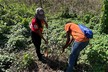
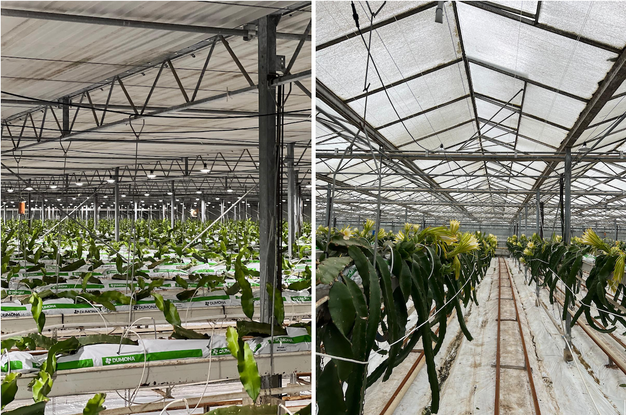
Traditionally grown in the open ground, the pitaya requires complete adaptation to be grown soilless. "Pitaya comes from a cactus that can live for around twenty years. With the Dumona company, we wanted to develop a specific substrate capable of lasting at least ten years while ensuring optimum drainage." Another specific feature of the crop is that it traditionally takes 12 to 18 months for the plant to drop, marking the start of flowering and therefore fruiting. But to reduce this time and get into production more quickly, Abderrahim Oufaquir chose to plant the plants on two-meter high gutters. "The plants planted in March 2025 produced their first flowers at the end of the summer, so we saved precious time." And to encourage optimum flowering of this long-lived plant, the grower opted for mild night-time lighting.
 © Abderrahim Oufaquir
A production target of 80T/ha
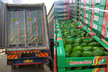
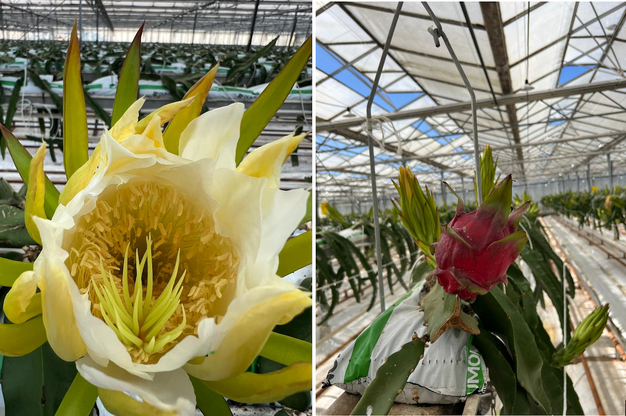
With the aim of growing a new variety that is above all rapidly profitable, Abderrahim Oufaquir decided to plant directly on one hectare from the first year, in order to offer significant volumes to his commercial partners. The density, inherited from the configuration of the greenhouses originally built to grow tomatoes, allows optimum use of the space. "The first fruits were harvested in September. As the plant is still in the settling-in phase, volumes are still modest but are progressing steadily. The aim is to reach around 80 tons a year when the plantation is fully productive. The production window is expected to stretch from March-April to November-December, with a winter dip linked to temperatures. "I would have liked to be present during the winter period, but it is not possible yet. This calendar still allows us to be present on the market before the Spanish campaign starts and when it ends.
The farm uses organic methods and no chemicals, a conscious decision to position the Vendée pitaya in a premium segment.
 © Abderrahim Oufaquir
French production positioned at the top end of the market
By growing pitayas in France, the aim is to offer a fruit whose quality sets it apart from other origins. This objective already seems to be well under way, given the initial results. "The tastings we have carried out on our first pitayas are very promising. The blind tests have confirmed a significant advantage in quality. Our pitaya is more fragrant and sweeter than some imported products, with a sugar content of up to 15/16° Brix. We are only at the beginning of the cultivation process, so there is still plenty of room for improvement."
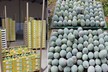
Diversification: initial processing trials 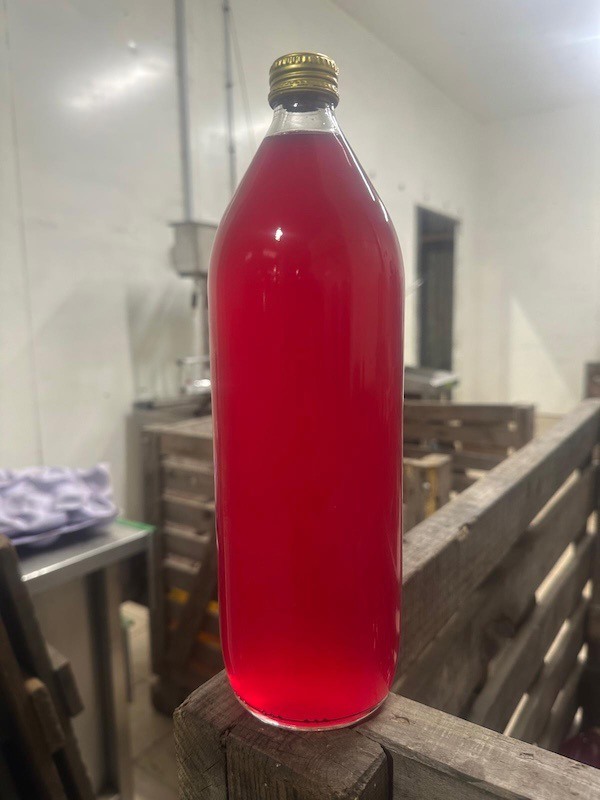 © Abderrahim Oufaquir
The only downside identified so far is the irregularity of production. "That is the problem we are facing at the moment: some weeks have good yields and others have gaps in production, which causes certain complications in terms of logistics and with regard to supermarket clients in particular, who prefer regularity. But this is just the beginning, and we are working hard to remedy the situation. At the same time, to absorb the production peaks, processing trials have been carried out in partnership with a Vendée company that produces apple juice. The apple-pitaya blend turns out to be particularly interesting. "It is a pleasant, well-balanced product with a number of virtues that can complement our range during periods of high production."
The start of a great story?
A great project, both ambitious and promising, but also cooperative. "When I spoke about this project to the director of Océane, Christian Bardoul, who had just taken up his post at the company, he immediately gave me his support and enthusiastically welcomed this new idea. Without Océane and her team, cultivation would not have been possible. I am also convinced that pitayas have a great future, that a French sector could be created, that the model we are building could be replicated by other producers, and even pave the way for other exotic crops. Our project has made its mark, now it is up to us to shape it up!"
For more information:
Abderrahim Oufaquir
SCEA Les Petites Métairies
[email protected]