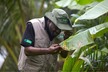
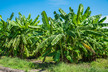
Vietnam's Ministry of Agriculture and Environment (MAE) has launched an emergency project targeting banana wilt disease caused by Fusarium spp. TR4. The initiative is valued at US$120,968 and funded by the Food and Agriculture Organisation of the United Nations. The program runs from September 2025 to May 2026 in 15 provinces, ranging from Hanoi, Hung Yen, Lao Cai, and Lai Chau in the north to Dong Nai, Tay Ninh, Can Tho, and Ca Mau in the south.
MAE reports that the project aims to reduce TR4-affected areas by 40 per cent, identify one to two resistant banana varieties, and isolate at least one antagonistic microorganism strain. Bananas are a key export crop for Vietnam, supplied to more than 10 markets, including China, South Korea, Japan, and the European Union. High-end markets are increasing the requirements for disease-free and traceable production areas.
Deputy director of the Department of Crop Production and Plant Protection Nguyen Quy Duong stated that this is Vietnam's first TR4 project aligned with international standards. He said it combines epidemiological mapping, resistant varieties, and biological control, adding that it will support local authorities in responding to outbreaks and strengthen farmer capacity in crop protection.
The project focuses on five outputs. A TR4 monitoring and early warning system will be established, with 300 samples collected to develop a national disease distribution map. Diagnostic capacity will be expanded using PCR and LAMP techniques, supported by trained experts and laboratory staff for early detection and reporting. TR4-resistant or tolerant banana varieties will be selected to support future breeding and production. Microbial strains antagonistic to TR4 will be identified to support biological control and reduce reliance on chemical approaches. The project will also develop a tissue culture process to produce disease-free banana seedlings and a TR4 management process suitable for local use.
Fruit and vegetable exports continue to play a large role in Vietnam's agricultural sector. According to the General Department of Customs, exports reached nearly US$1.3 billion in September 2025, an increase of 35.9 per cent from August and 41 per cent year-on-year. For the first nine months of 2025, the reported total was about US$6.11 billion, an 8.3 per cent increase. The September figure set a new monthly record for the sector.
Durians generated approximately US$1 billion by the end of August 2025. MAE reports that coconut, passion fruit, processed mango, pineapple, and banana also recorded growth.
Vietnam is directing efforts toward market diversification and increased deep processing to reduce reliance on fresh exports. MAE is also encouraging the use of digital technologies such as blockchain, QR codes, and digital plantation data systems to improve transparency, traceability, cost control, and risk management in supply chains.
Source: AgTEchNavigator