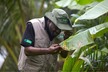
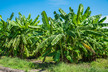
Costa Rica and Mexico are working together to develop a detailed plan of phytosanitary measures to safeguard biosecurity during the XXV International Acorbat Congress and the X International Banana Corbana Congress, scheduled for April 20-23, 2026, in Merida, Yucatan. The event will bring together banana industry representatives from over 40 countries, underscoring that preventing the spread of the fungus Fusarium oxysporum f. sp. cubense Raza 4 Tropical (Foc R4T) remains a key global concern.
The organizing committee, in collaboration with the Mexican National Service for Health, Safety, and Agri-Food Quality (Senasica), will establish strict protocols for disinfection, control, and surveillance at entry points into the country and at hotels and event venues. These measures are intended to minimize the risk of introducing Foc R4T, a pathogen not present in either country but known to cause severe damage to banana plantations elsewhere.
 © Corbana
Mexico and Costa Rica are fully dedicated to protecting the banana crop's phytosanitary health. Our goal is to provide a safe environment for everyone involved by implementing strict risk management measures," stated Rafael Segura Mena, director of the Corbana Research Centre and vice-president of the Acorbat board.
All attendees, including speakers, organizers, service providers, and local suppliers, must follow the established biosecurity measures. International participants will sign an affidavit pledging to obey the rules, avoid visiting plantations in Mexico, and refrain from carrying plant materials.
Upon arrival, travelers will pass through sanitary mats at airports and border crossings. Senasica will increase inspections using canine units, X-ray scans, and disinfection procedures for footwear and vehicles. The Congress venue will have strict access control and continuous supervision.
Before the event starts, the Fusarium Command (an international team of experts focused on preventing and controlling the fungus) will meet. This gathering will serve as a platform for coordination and sharing updates on scientific progress and global strategies against Foc R4T.
The Mérida Congress is expected to be a major event on the global banana calendar due to its technical focus and its role in safeguarding the crop's health, which is crucial to the sector's sustainability.
The Corporación Bananera Nacional (Corbana) is a public entity in Costa Rica that is not part of the government. It focuses on developing the banana industry through scientific research, technical support, and the promotion of Costa Rican bananas internationally.
The Association for Cooperation in Research and Integral Management of Banana and Plantain Crops (Acorbat), established 60 years ago, encourages technical and scientific collaboration among producers, researchers, and experts from banana-growing nations.
For more information:
https://congresoscorbana.com/
www.corbana.co.cr