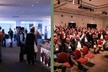
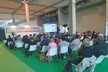
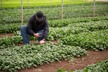
From 5 to 7 November 2025, the conference of the World Union of Wholesale Markets (WUWM) took place in Brussels. Spread across several locations, with a main conference day at the Royal Museum of Fine Arts in Brussels, the global wholesale markets sector gathered to discuss challenges and opportunities. The conclusion? "There is still a world open for wholesale markets."
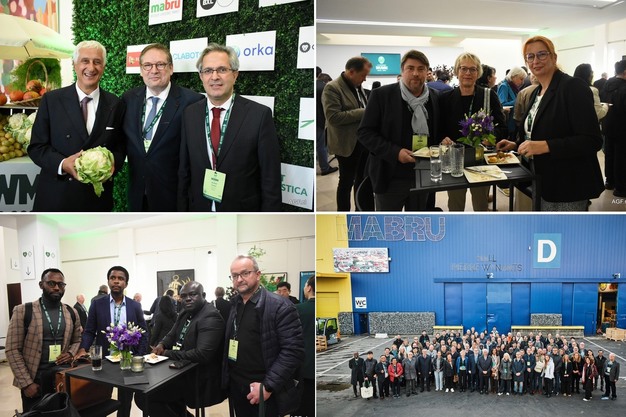 © Jannick Flach | FreshPlaza.com
The event opened with an official ceremony featuring Stephane Layani (WUWM), Qu Dongyu (FAO), David Clarinval (Minister of Agriculture, Belgium), Rudi Vervoort (Minister-President of the Brussels-Capital Region), Sevket Temiz (President Mabru), and Laurent Nys (Director Mabru), who discussed the importance of wholesale markets. Although their numbers continue to decline, they remain vital in many parts of the world. "Modern wholesale markets are the most efficient and inclusive logistics platforms for fresh produce, contributing to food security both locally and globally. They give small and medium farmers and growers access to markets, expanding their opportunities and offering consumers attractive prices. Unfortunately, they are still often overlooked in policy discussions, despite their great importance in the food chain. In Europe, around 40% of the total fruit and vegetable supply passes through wholesale markets each year. We want to underline this importance today."
Technology is there, but humans need to take the first step
The opening discussions focused on opportunities for digitisation and innovation in wholesale markets. Topics such as AI, traceability, and solar energy took centre stage. A key takeaway among speakers Michael Putz (Orderlion), Huang Jingsheng (Chairman Guangdong Caiding Holdings), Nicolas Winter (Rungis), Leo Cheung (P&C Group), Quentin Ramon (Orka Solaire), and Yasmine Salehy (Frise) was that the tools for innovation already exist, but they are not always being fully used. Through case studies from Rungis and others, they illustrated how AI, among other technologies, can help wholesale markets progress.
"Digital transformation does not fail due to a lack of technology; people need to act on it. Trust, communication, and engagement are crucial. Transparency is the foundation of trust throughout the chain, from farmer to consumer." The speakers emphasised that wholesale markets should evolve into service hubs, not only for logistics but also for energy, data, and technology. For example, by installing flexible solar panels, markets can also become energy producers. The importance of collaboration between research, policy, and practice was highlighted, along with the sharing of data and knowledge to accelerate innovation. The overarching message was that wholesale markets need to transition step by step into sustainable, digital, and people-centric service hubs.
Collaboration
Roland Gillet of La Sorbonne University presented an analysis of current economic relations between the United States, Europe, and China, in light of a potential new presidency of Donald Trump. He noted that many of today's trends, such as the growth gap between the US and Europe, began before Trump. He cautioned that Trump's pragmatic, business-oriented but unpredictable style could disrupt global trade, although stabilising factors remain, such as a strong US administration and resilient businesses. For Europe and the wholesale sector, this means preparing for greater volatility in trade and exchange rates, while also seizing opportunities in cooperation, innovation, and efficiency.
 © Benjamin Brolet
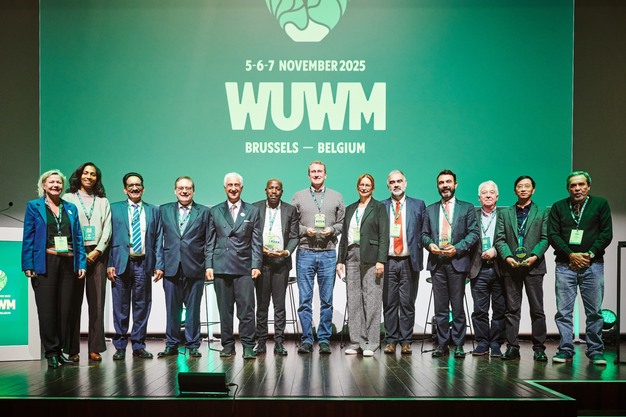
The winners of the WUWM awards
During the panel on the opportunities and challenges of feeding cities, Andrea Magarini, Javier Esquillor, and Sello Makhubela discussed how large cities can organise their food supply sustainably. Central themes included collaboration between farmers and growers, markets, schools, and governments, as well as the role of technology and data in making food chains more efficient. Andrea focused on local production and reducing food waste, Javier addressed logistics and digitalisation, and Sello highlighted that key priorities for Johannesburg's wholesale market lie in regional cooperation and food security. They stressed that the human factor, collaboration, awareness, and resilience, is essential to feed megacities sustainably in the future.
Mindset on food waste
Finally, the discussion turned to food waste and sustainable food systems. David Weytsman of the Dream Project, Rikke Karlsson of the EU, and Nicolas Lemonnier of Potager de Marianne noted that the major challenges lie in logistics, coordination, legislation, and raising awareness among producers and wholesalers about the value of their donations. Financial and psychological barriers also play a role: wholesalers sometimes prefer to sell products at a loss rather than donate them. At the same time, surplus donations offer opportunities to reduce food waste, cut costs, and strengthen cooperation between public and private sectors.
Through the Dream Project in Brussels, David aims to show that small-scale initiatives can grow into large-scale impact—provided there are strong partnerships, clear communication, and political as well as financial commitment. A key insight is that changing mindsets and language, for example, by speaking of 'resources' instead of 'waste,' helps foster a positive culture. The trio's call to action is clear: just start, work together, make space for social initiatives, and use existing infrastructure, knowledge, and technology to combat food waste.
The closing remarks came from WUWM President Stephane Layani, who thanked all participants for their energy and dedication to strengthening wholesale markets and food systems. Special thanks were given to Mabru. Today, the program concludes with working groups and the general assembly, followed by a gala dinner. The chairman looked ahead to the next edition: "Many thanks and safe travels home!"
For more information:
www.wuwmbrussels2025.com